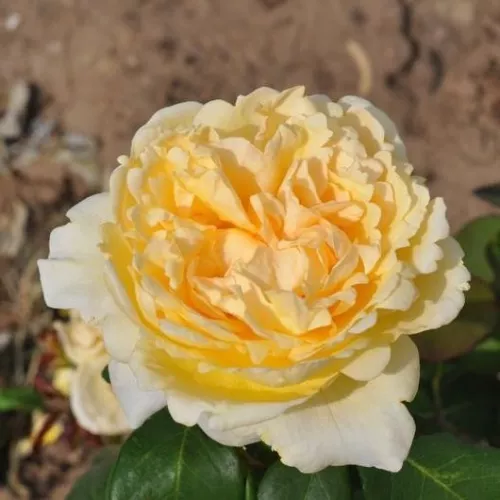
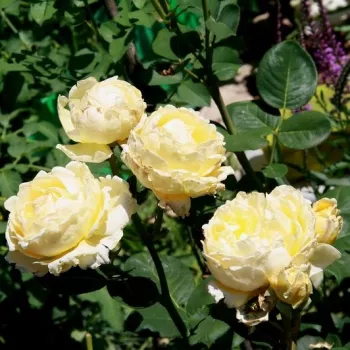
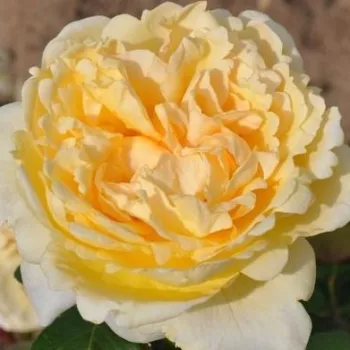
Rich sunny-yellow base colour with a subtle peach tint towards the centre of the petals. - hybrid tea rose - very strongly scented, detectable from afar rose - classic, rose-like character
– Large, very full rosette blooms
– Rich deep yellow colour, excellent retention
– Very strong, classic rose fragrance
– Upright, compact habit with dense glossy foliage
– Good heat tolerance and H7 winter hardiness
– Special feature: Gold and Silver Medal winner in top Italian rose competitions (Premio Roma, Monza).
Balanced arrangement – Guarantee of origin
pharmaROSA® ORIGINAL 2-litre own-root potted rose
18,70 £
Unfortunately, we are currently unable to ship to the United Kingdom; we only deliver to countries within the European Union. For more information, please contact us!
4.5(6870)
Barbetod – deep yellow hybrid tea rose
This elegant hybrid tea offers sunny borders and reliable, upright structure in the classic British front garden, bringing long-stemmed blooms that look equally at home in beds and vases. Large, very full flowers with an intense classic fragrance appear repeatedly through the season, with colour that holds well even in variable summer weather and breezy, rain-exposed sites near the house. Its glossy, dark foliage and slightly thorny stems frame the deep yellow rosette blooms beautifully, giving a refined but approachable look in small groups or as a solo feature. As an own-root plant it develops steadily from root-building to fuller top growth and then to mature display over its first three years, building long-term confidence for less experienced gardeners and adding lasting value to the garden. Well-suited to modestly sized beds and generous containers, this rose rewards simple, regular care with season-long flowers, dependable colour and a fragrance that encourages you to pause on your way to the front door, while its moderate care needs remain perfectly manageable for busy households.
Freshly opened flower of Barbetod (Bella di Todi®).
Barbetod showing its pre-fading colour shift to pale buttery yellow.
Barbetod shows a very full, rosette-shaped bloom.
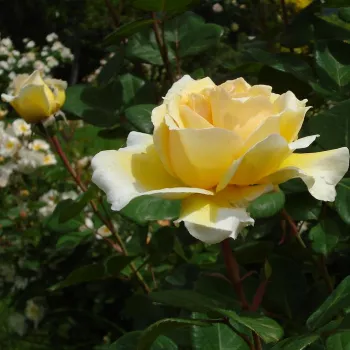
Dense, glossy dark green foliage of Barbetod.
Usage options
Target area
Reasoning
Front garden feature rose
Its upright habit and dense, dark foliage create a neat vertical accent that suits the scale of typical British front gardens, while the strongly scented, deep yellow blooms add an instant sense of welcome by the path or gate; ideal for beginners.
Small mixed bed or border
The rich yellow rosette flowers stand out well against perennials and shrubs, and the reliable repeat flowering keeps the bed lively through summer, so you gain steady colour without complicated planting schemes; reassuring for homeowners.
Cutting patch near the house
Long, straight stems with solitary, exhibition-style blooms make this an excellent source of fragrant cut flowers, allowing you to bring its classic scent indoors regularly from a modest planting; perfect for flower-lovers.
Specimen in a large container
Its compact, upright form works well in a 40–50 litre pot on a sunny patio or doorstep, where regular watering and feeding are straightforward and you can enjoy the flowers and fragrance at close quarters; convenient for balconies.
Formal rose bed or small group planting
Planted in groups of three to five at recommended spacings, the uniform height and balanced bush shape create a structured, classic rose-bed look that fills out reliably over time with minimal shaping; suitable for planners.
Cottage-style combination planting
The warm yellow blooms blend beautifully with blues and mauves, echoing traditional cottage gardens, while the tidy bush form stops the border becoming unruly, easing maintenance for those who prefer relaxed yet ordered schemes; ideal for stylists.
Sunny, exposed sites in family gardens
Good heat tolerance and sound overall resilience let it cope well with sunny, open spots that receive plenty of wind and rain, supporting stable flowering where more delicate roses might struggle; reassuring for coastal gardens.
Long-term own-root rose area
As an own-root shrub it builds a durable framework that can regenerate from the base if pruned harder, giving a longer-lived planting that maintains its character without complex graft management; valuable for forward-thinking gardeners.
Styling ideas
Doorstep – Place one plant in a generous terracotta pot with trailing thyme or lobelia at the base for a simple, fragrant welcome – for design-conscious homeowners.
Cottage – Combine with lavender, nepeta and soft pink roses for a relaxed border where the warm yellow flowers provide gentle contrast – for lovers of traditional cottage gardens.
Accent – Use three plants in a small triangular bed near a path to create a structured focal point of repeating golden blooms – for those seeking easy front-garden impact.
Ribbon – Plant a short row along a low fence, underplanting with hardy geraniums to soften the line while keeping a tidy, upright silhouette – for suburban family gardens.
Cutting – Dedicate a sunny strip with a few bushes spaced for access, mixing in annuals like cosmos for continuous cutting material – for home florists and hobby arrangers.
Technical cultivar profile
Property
Data
Name and registration
Hybrid tea rose, registered as BARbetod, marketed as Barbetod Le Toscane and Bella di Todi®, exhibition hybrid tea suitable for garden and cutting use.
Origin and breeding
Bred by Anna Medici Barni in Italy from an unknown seedling × ‘Antico Amore’, introduced by Rose Barni in 1999 after selection in 1998.
Awards and recognition
Gold Medal at Premio Roma International Rose Competition 1999 and Silver Medal at Monza International Rose Competition 1999, confirming ornamental and garden value.
Growth and structural characteristics
Upright bush 75–105 cm high and 50–70 cm wide, with dense, glossy dark green foliage and only slight thorniness, forming a balanced, medium-sized shrub.
Flower morphology
Large, very full rosette blooms with 40+ petals, mainly solitary on stems, remontant with a plentiful second flush, giving high decorative value through the season.
Colour data and phenology
Deep sunny yellow with subtle peach tones, RHS 11B outer and 14B inner, deepening to golden yellow then softening to buttery yellow margins as blooms age, with very good colour retention.
Fragrance and aroma
Very strongly scented with a classic rose character, detectable from a distance; double form gives moderate pollinator access, so it functions mainly as an ornamental fragrance rose.
Hip characteristics
Rose hip formation is minimal; small spherical hips about 10–14 mm may appear, typically orange-red, but generally of limited ornamental impact in normal garden use.
Resistance and winter hardiness
Hardy to around −21 to −18 °C (RHS H7, USDA 6b, Swedish zone 3), with moderate resistance to black spot and powdery mildew and good rust resistance under average care.
Horticultural recommendations
Best in a sunny position with well-drained soil; suitable for beds, specimens, hedging, containers from 40 litres, and cutting gardens, needing occasional deadheading and plant protection.
Barbetod offers richly scented golden blooms, a compact upright habit and reliable repeat flowering on a durable own-root framework; a thoughtful choice if you favour classic roses that reward straightforward care.
Detailed product attributes
Product Identification Data
Product Name:
BARBETOD – deep yellow hybrid tea rose - Barni
Product Type:
pharmaROSA® ORIGINAL - 2-litre own-root potted rose
Competition and Show Awards:
Gold Medal – Premio Roma International Rose Competition (1999); Silver Medal – Monza International Rose Competition (1999)
Flower Colour Description:
Rich sunny-yellow base colour with a subtle peach tint towards the centre of the petals.
Closed Bud:
The closed bud is a vivid golden yellow, its outer petals slightly paler, leaning towards lemon yellow.
Newly Opened Flower:
The inner surfaces of the petals are a deep, warm yellow, while their outer faces have a soft yellow hue.
Full Bloom:
When fully open, the colour deepens to a darker golden yellow, with a gently fading margin on the outer petal ring.
Before Fading:
The petals are light, fading to buttery yellow with a pale butter-cream yellow discolouration at the edges.
Colour Fading Description:
On opening the colour deepens to golden yellow, then before the bloom fades it lightens to a pale buttery yellow with a subtly paler margin on the outer petals.
Our product is a rose grown with pharmaROSA®’s unique cultivation technology!
2-litre, own-root, potted rose.
With a shoot system appropriate to the season.
With a root system that thoroughly permeates the growing medium.
Quality compliant with the requirements of the E.N.A. (European Nurserystock Association).
Supplied in unique packaging that prevents damage.
Can be planted during frost-free periods.
True-to-variety rose bush with a unique identifier.
The pharmaROSA® own-root potted rose is a well-rooted plant that supports reliable establishment when planted and cared for properly, so it can be planted whenever the soil is not frozen.
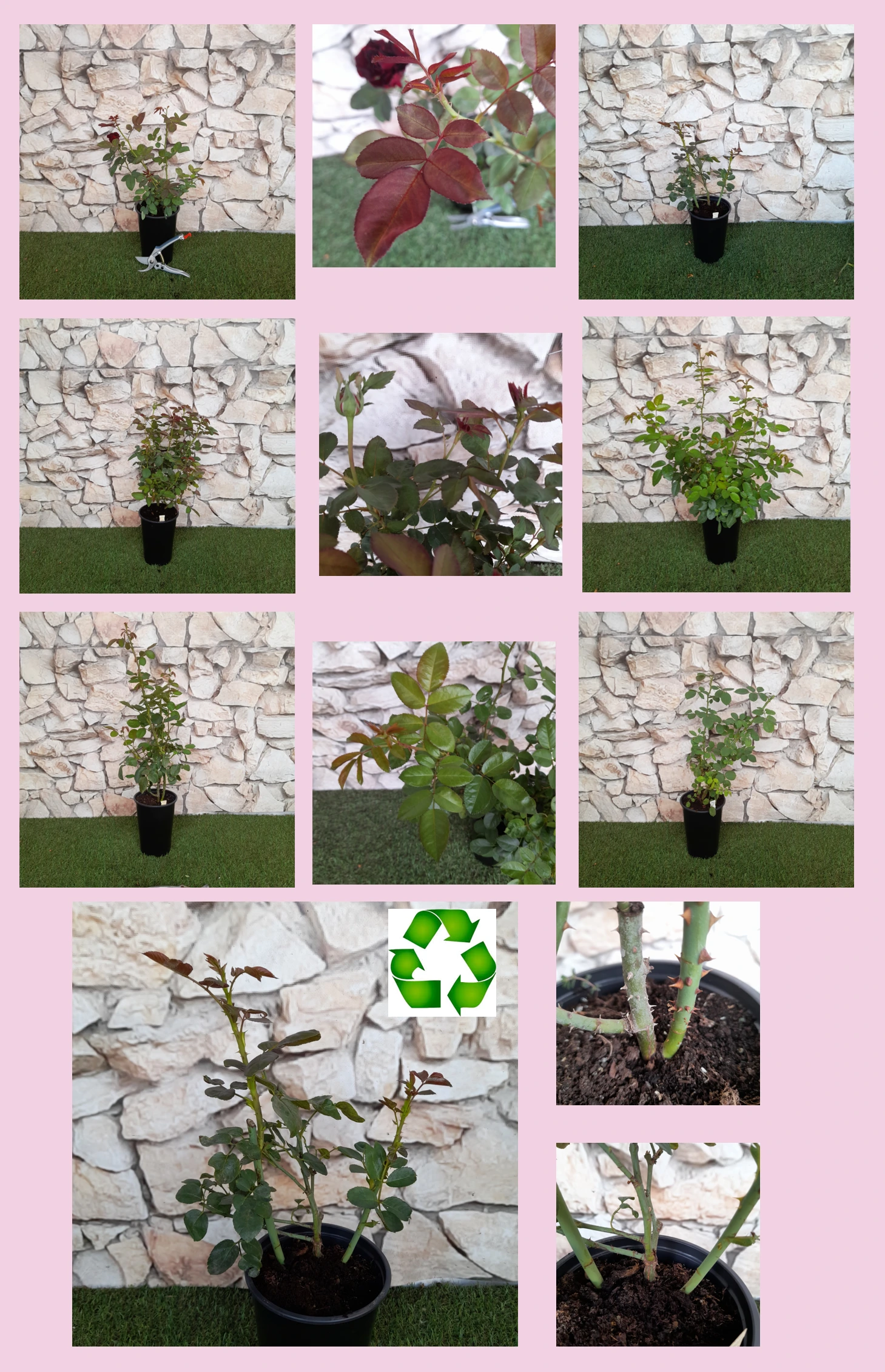
Crop overview: several varieties and growth stages in a short crop section.Shoot system: intensive growth of fresh basal shoots on a young plant.Root system: demonstration of a vigorous root system permeating the growing medium, by removing the pot.Balance: mature plant with root system and shoots in harmony with each other.
Information about the videos
The video series is not a “seasonal showcase”; it illustrates the essence of pharmaROSA® own-root cultivation in a tangible way: how the plant is built up, what the root system is like and how the shoot system regenerates. The recordings were therefore made at different times and with plants at various stages of development, so mixed foliage levels and differing stages of growth may appear in the videos. They are not a ‘sample’ of the batch dispatched, but a visual explanation of how the technology works. The current condition of the rose available to order — typical for the given period and similar to what you can expect to receive in the parcel — is shown in the upper part of the product page.
Pages for private customers Garden roses for the family garden, with minimal care → ORIGINAL® Premium garden roses – instant impact, a truly showpiece garden → EXTRA® Pages for professionals and private customers Roses for public spaces – large areas, sustainable maintenance → NATURAL® Roses for projects – hedge and row planting, fast implementation → RAPID® For professional partners only Production – propagation material for garden roses, wholesale → NEONATAL®
Company details
PharmaRosa Ltd. Company registration number: 01-09-717479 VAT number: 13075314-2-43 Plant health registration no.: HU130721 Bank account (IBAN): HU85117631891388688400000000 BIC (SWIFT): OTPVHUHB Bank name: OTP Bank Nyrt.