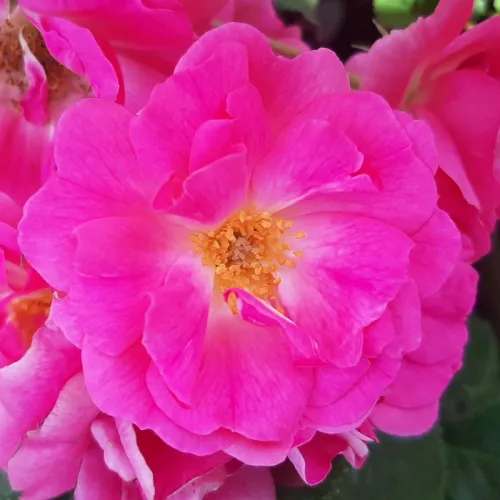
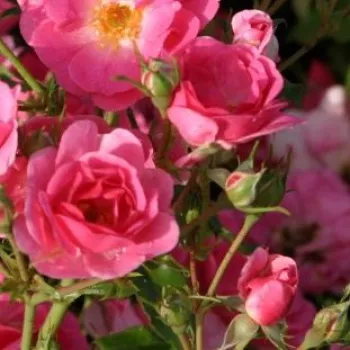
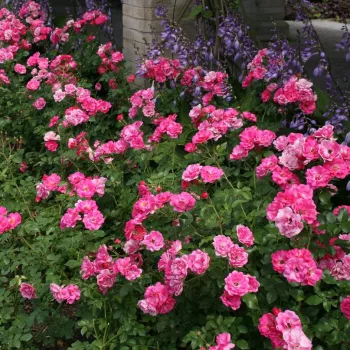
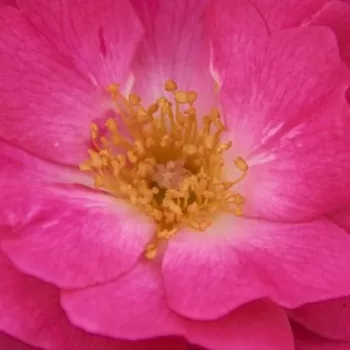
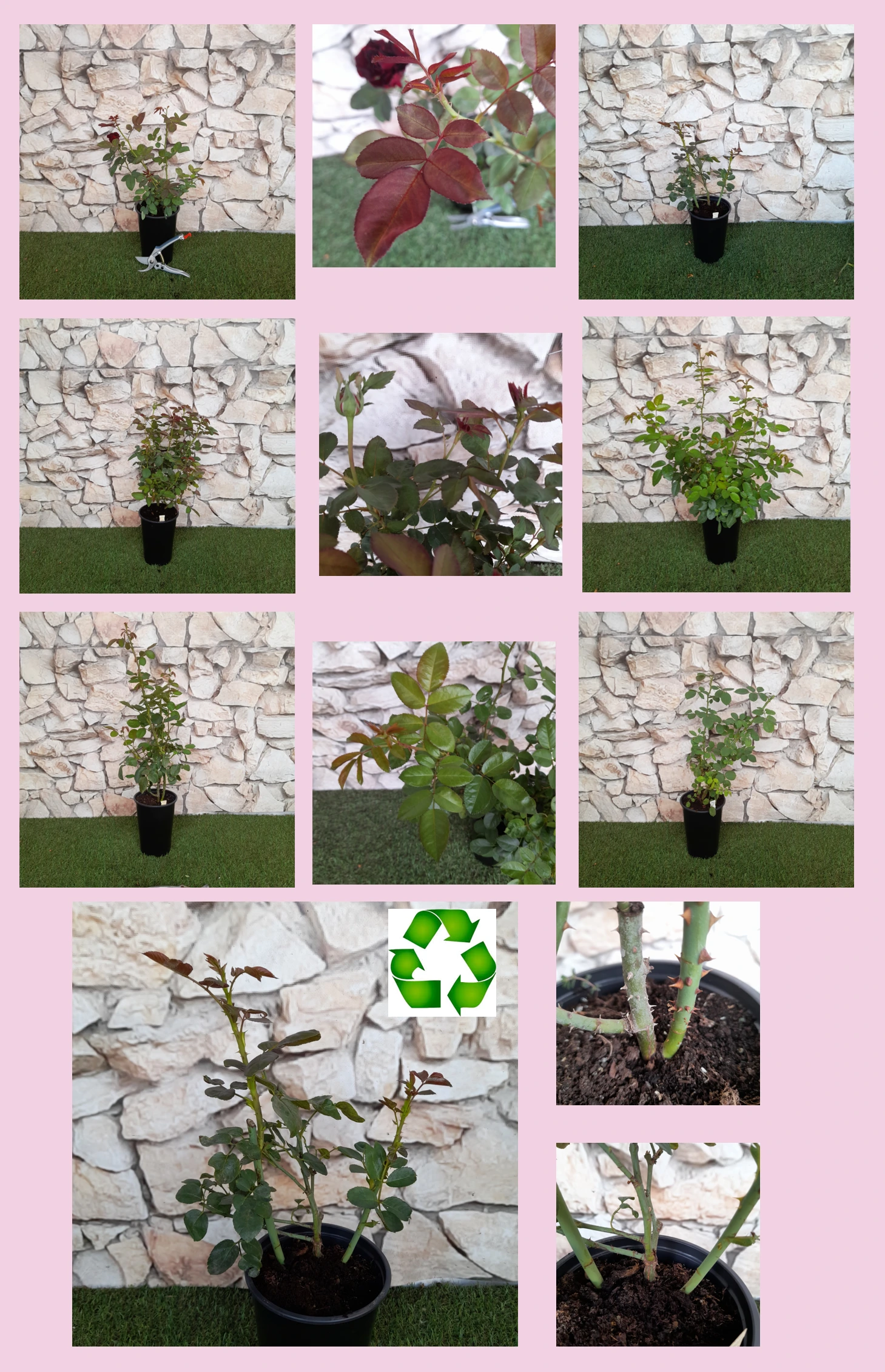
BAD WÖRISHOFEN ® – carmine‑pink bedding floribunda rose – Kordes
If You would like a classic rose that is beautiful yet manageable, BAD WÖRISHOFEN ® offers a reliable route to a colourful, tidy front garden. Its bushy, compact habit and vivid carmine-pink clusters give strong impact even in modest beds and borders, while the proven Kordes breeding and ADR award point to long-term health and dependable performance. As an own-root plant, it settles in steadily and builds a durable framework over the years for real longevity, coping well with typical British weather and soils, including sites where You want planting that stands firm in persistent wind and rain. Low maintenance needs and excellent disease resistance make it particularly manageable for busy or less experienced gardeners, and its neat height suits smaller plots, cottage-style mixes and containers. With thoughtful watering and feeding, You can enjoy a clear development from establishing roots, through building top growth, to full ornamental value by the third year, giving You lasting confidence in Your planting. BAD WÖRISHOFEN ® fits easily into everyday family gardens, providing generous colour and a professional, well-kept appearance without demanding complicated care routines.
Usage options
| Target area | Reasoning |
|---|
| Front garden beds near the entrance |
The compact 50–75 cm height and bushy habit create a well-defined, low hedge-like line that frames paths and doorways without overwhelming smaller front gardens. Its saturated carmine-pink flowers give strong kerb appeal from a modest footprint, ideal when You want clear structure but easy upkeep, particularly suited to the busy-urban gardener. |
| Small mixed borders in family gardens |
The consistent, remontant flowering adds season-long colour among perennials and shrubs, with clusters that read clearly from a distance. This steady, repeat display means fewer gaps and less replanting, helping a young or renovated border look complete within a couple of seasons, attractive for the design-conscious beginner. |
| Low-maintenance rose or bedding schemes |
Very good disease resistance and low maintenance requirements reduce the need for spraying and complex pruning, making it easier to keep a tidy, healthy planting with limited time. Simple annual pruning is usually sufficient, so the display stays fresh and neat with minimal intervention, reassuring for the time-pressed homeowner. |
| Cottage-style groupings of 3–5 plants |
Planted in small groups, the vivid carmine-pink blooms form a dense block of colour that anchors softer cottage mixtures of geraniums, salvias or campanulas. The semi-double, cupped flowers have a traditional feel that blends well with classic British planting, appealing to the cottage-garden enthusiast. |
| Urban and roadside frontages |
Very good tolerance of urban conditions and exhaust pollution makes this cultivar reliable for front gardens on busier streets or near parking areas. It keeps a fresh, glossy foliage and clear flower colour even where air quality is less than ideal, which supports resilient planting choices for the city-front-garden owner. |
| Medium to large containers (40–60 litres) |
The compact, rounded shape and moderate root system suit large pots of at least 40–50 litres, giving stable growth and enough soil volume for moisture balance. In containers on patios or doorsteps it provides a strong focal point without excessive pruning, helpful for the balcony-and-terrace gardener. |
| Family play gardens with simple care |
The moderate height and bushy structure fit easily alongside lawns and play areas, giving colour without intrusive thorns at eye level. As an own-root shrub it recovers steadily from occasional accidental damage and builds a durable framework over time, well matched to the family-garden planner. |
| Small beds in exposed or coastal-feeling sites |
Its dense growth and sound anchoring help it stand up to brisk winds and unsettled weather, valuable where planting must cope with frequent rain and gusts without lodging. Combined with remounting blooms and good colour retention, this offers a stable, attractive presence for the practical garden owner. |
Styling ideas
- Cottage cluster – Plant 3–5 together in a small bed, underplant with hardy geraniums and low catmint to soften the outline and echo the vivid pink – ideal for lovers of traditional cottage borders.
- Entrance focus – Use a pair in large 50–60 litre containers flanking the front door, with trailing ivy or heuchera around the base for foliage contrast – suitable for homeowners seeking neat, formal symmetry.
- Family border – Mix in a sunny border with coral bells, low ornamental grasses and spring bulbs so colour carries across seasons with little fuss – perfect for busy families wanting dependable structure.
- Urban ribbon – Line a short front boundary or path with evenly spaced plants at 50–60 cm for a compact, hedge-like band of pink – good for city gardens needing order and easy maintenance.
- Colour island – Create a small island bed on lawn with a central group of BAD WÖRISHOFEN ®, edged with lavender or dwarf box, for strong season-long impact – suited to beginners wanting a simple focal feature.
Technical cultivar profile
| Characteristic | Data |
|---|
| Name and registration |
BAD WÖRISHOFEN ® Vigorosa® (KORselary), floribunda bedding rose from the Vigorosa® collection; shrub rose exhibition category, ARS exhibition name Bad Wörishofen 2005, group: floribunda bed rose. |
| Origin and breeding |
Bred by W. Kordes’ Söhne, Germany, and introduced in 2005; parentage not published. Registered in 2005 as KORselary and distributed initially by W. Kordes’ Söhne for garden and landscape use. |
| Awards and recognition |
Holds ADR certification, reflecting strong garden performance and health; awarded Gold Medal at Kortrijk 2007 and Gold Medal in Paris 2008, confirming ornamental and practical quality. |
| Growth and structural characteristics |
Compact, bushy shrub 50–75 cm high and wide, with dense, dark green, glossy foliage and moderate prickles. Forms a rounded, bedding-style plant suitable for low borders, mass planting and containers. |
| Flower morphology |
Semi-double, cupped flowers with around 13–25 petals, medium-sized at approximately 4–7 cm across, borne mainly in clusters. Repeat flowering with a particularly abundant second flush in suitable conditions. |
| Colour data and phenology |
Vivid carmine-pink blooms (RHS 55B outer, 55C inner) from bud to full flower, with very good colour retention. Flowers lighten slightly as they age, shifting gently towards light pink without unattractive blotching. |
| Fragrance and aroma |
Fragrance is very weak and of neutral character, so it is chosen primarily for colour, health and structure rather than scent. Semi-double to fuller form offers limited pollinator access and attraction in most gardens. |
| Hip characteristics |
Hip set is generally low; when present, produces small spherical orange-red hips (RHS 34A) about 6–10 mm in diameter, adding a discreet late-season accent without dominating the plant’s overall appearance. |
| Resistance and winter hardiness |
Excellent disease resistance, with good tolerance to black spot, powdery mildew and rust. Hardy to approximately −26 to −23 °C (RHS H7, USDA 5b, Swedish Zone 4), suitable for most UK regions with minimal protection. |
| Horticultural recommendations |
Best in well-drained soil with regular moisture; suited to beds, borders, parks, urban plantings and large containers. Low maintenance; simple annual pruning keeps form, and moderate feeding supports repeat flowering. |
BAD WÖRISHOFEN ® offers vivid season-long colour, compact habit and reliable disease resistance in an own-root form that matures into a long-lived, stable shrub, making it a thoughtful choice when planning an easy-care family garden.