Auswith – St. Swithun English climbing rose for family gardens
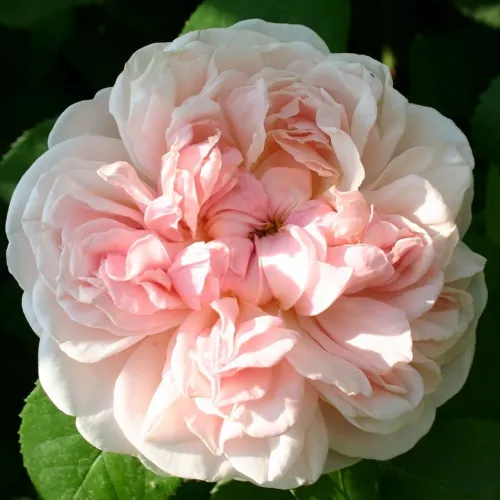
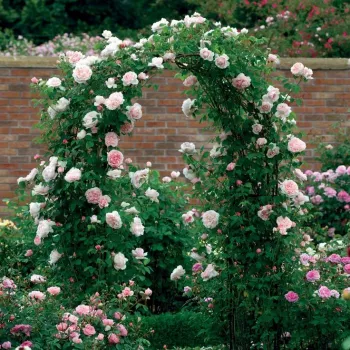
This David Austin English Rose combines romantic charm with practical reliability for typical British family gardens, creating soft pastel-pink, rosette blooms with a strong, myrrh-like fragrance from early summer onwards. Its versatile, climbing-scrambling habit is ideal for trellises, fences and cottage-style entrances, where a lush, grey-green backdrop of foliage builds a lasting structure that anchors the planting even in sites with frequent rain and wind. As an own-root pharmaROSA ORIGINAL plant, it settles steadily, forming a balanced framework you can prune either hard or lightly for flexible training in small spaces or along house walls. With moderate care needs and good winter hardiness, it offers dependable flowering without complex techniques, gradually increasing display as roots strengthen, shoots develop, and full ornamental impact appears over the first three years.
Usage options
| Target area | Reasoning |
|---|
| Front-garden climber on trellis or obelisk |
Its medium-height, climbing habit fits neatly against a front-garden trellis or obelisk, giving vertical colour without overwhelming a small space. Repeat pastel-pink blooms and strong scent provide a classic welcome for visitors while remaining manageable for beginners. |
| House wall or fence, cottage-style backdrop |
The flexible, scrambling growth ties in easily along a sunny or lightly shaded wall or fence, creating a soft, romantic backdrop in grey-green leaf and powder-pink flowers. It copes well with typical British showers and breezes, supporting those who want charm with low-maintenance. |
| Pergola or arch in family garden |
Trained over an arch or light pergola, the long, pliable canes build a gently cascading canopy of rosette blooms with a strong, far-carrying myrrh fragrance. This creates a focal point for paths and play lawns, suiting families who value atmosphere and long-lasting planting. |
| Mixed shrub and perennial border |
Used as a tall shrub-climber at the back of a mixed border, it weaves among perennials without rigid formality, giving soft colour and scent through the season. Own-root growth builds a stable framework over time, appealing to gardeners seeking quietly reliable structure. |
| Specimen rose in partial shade |
This variety tolerates partial shade, making it suitable for side gardens or east-facing aspects where full sun is limited. Flowering remains good with adequate moisture and feeding, giving confidence to those with trickier positions and limited time for experimentation. |
| Small group planting for cohesive display |
Planting 2–3 plants together along a fence or boundary achieves a fuller, unified display more quickly, while repeat flowering ensures colour continuity. The balanced, medium vigour responds well to simple, once-a-year pruning, suiting busy owners who prefer straightforward care. |
| Roses for cutting and scented arrangements |
The large, many-petalled, rosette blooms with strong, myrrh-like perfume make elegant cut flowers when picked in early opening. Regular cutting encourages further flowering, offering home-grown, scented stems for vases to those who appreciate indoor fragrance and beauty. |
| Container on patio or balcony (large pot) |
In a 40–50 litre container with good drainage, its manageable vigour and arching canes can be trained to a support, giving height and scent where borders are limited. Reliable repeat blooming and winter hardiness suit urban gardeners seeking impact without complex techniques. |
Styling ideas
- Cottage Arch – Train Auswith over a metal or timber arch, underplant with catmint and low geraniums for a soft, traditional entrance – ideal for lovers of romantic cottage paths.
- Pastel Fence – Along a front fence, combine it with white foxgloves and soft blue campanulas to create a gentle pastel screen – suited to homeowners wanting calm, elegant privacy.
- Country Pergola – Let canes drape from a pergola, with Verbena hastata ‘White Spires’ and airy grasses at the base – perfect for relaxed country-style seating areas.
- Shady Side – On an east-facing side wall, mix with evergreen climbers and shade-tolerant heucheras below – good for making the most of awkward, part-shaded plots.
- Patio Feature – In a large container, fan-train it to a trellis and pair with scented herbs in smaller pots – a practical solution for fragrance-focused balcony or terrace gardeners.
Technical cultivar profile
| Parameter | Data |
|---|
| Name and registration |
Auswith, English Rose Collection shrub and climbing rose; registered cultivar name AUSwith, marketed as St. Swithun / Auswith English Rose AUSwith for ornamental garden use. |
| Origin and breeding |
Bred by David C. H. Austin, United Kingdom; parentage unknown seedling × ‘Mary Rose’. Introduced and registered in 1993 by David Austin Roses Ltd., Albrighton, UK. |
| Growth and structural characteristics |
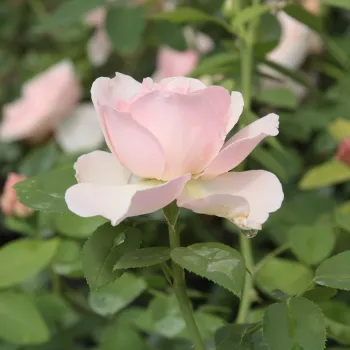
Medium-vigour, creeping to climbing habit, 240–340 cm high and 160–240 cm wide, with dense, slightly glossy grey-green foliage and moderate prickliness; best trained with support in gardens. |
| Flower morphology |
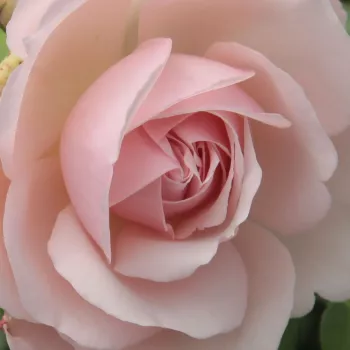
Large, very double, rosette blooms with over 40 petals, mainly solitary on stems. Remontant, with abundant first flush and strong repeat flowering later in the season under normal garden care. |
| Colour data and phenology |
Soft, pure pink flowers, RHS 65D outer, 65C inner, opening powder pink then fading to pale pastel and nearly white. Colour retention modest; best effect in cooler spells and light shade. |
| Fragrance and aroma |
Strong, far-reaching fragrance with full-bodied, myrrh-like character typical of English Roses. Best appreciated near paths, seating or doors where the scent can be enjoyed regularly. |
| Hip characteristics |
Rose hips are usually sparse; occasional ovoid, orange-red (RHS 37B) fruits 9–15 mm in diameter may form. Primarily grown for flowering and fragrance rather than for decorative hips. |
| Resistance and winter hardiness |
Hardy to approximately −26 to −23 °C (RHS H7, USDA 5b, Swedish zone 4). Disease resistance moderate to black spot, mildew and rust; benefits from basic preventative care and good hygiene. |
| Horticultural recommendations |
Best on well-drained soil with regular watering in dry spells; avoid prolonged drought. Suitable for trellis, pergola, fence, specimen, beds and cutting; space 140–220 cm depending on use. |
Auswith (St. Swithun) offers romantic pastel blooms, strong fragrance and reliable repeat flowering on a hardy, own-root framework that matures gracefully, making it a thoughtful choice for long-term structure and scent in a family garden.