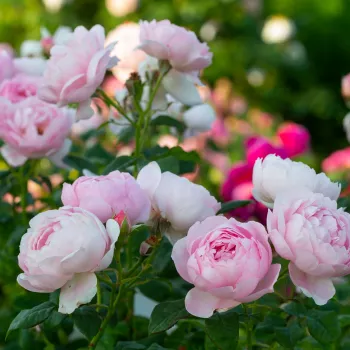
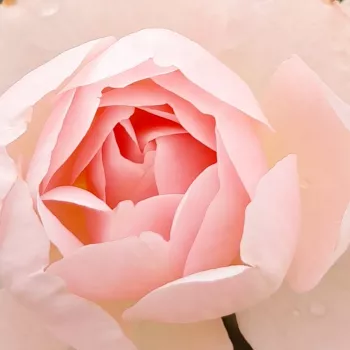
AUSland – light pink English rose – Austin
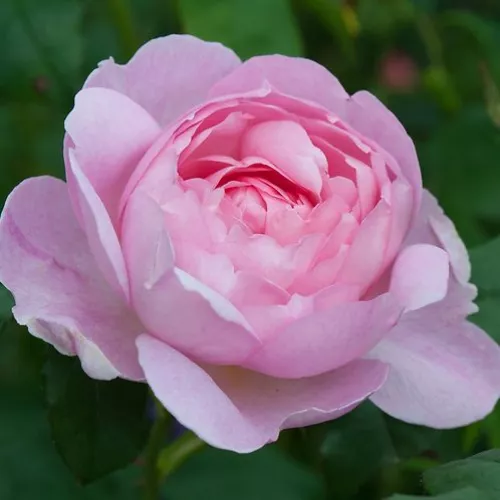
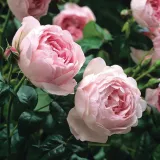
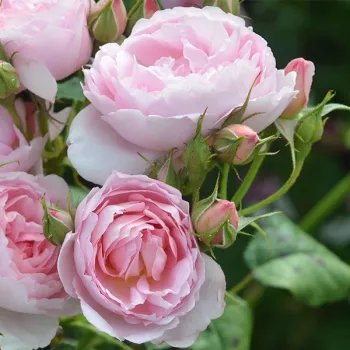
If you are looking for an easy, quietly impressive English shrub rose for a family garden, Ausland offers a refined mix of romance and practicality. Its upright, well‑branched habit remains naturally orderly, making it simple to place in small front gardens, narrow beds or around‑the‑house borders. Large, cupped blooms open in soft pastel pink with a classic English look, gradually lightening to near white for a gentle, luminous effect that suits cottage‑style planting. The very strong fragrance has the distinctive myrrh character associated with David Austin roses, easily perfuming a patio seating area or path. As an own‑root, premium shrub it is bred for longevity, building a stable, well‑anchored bush that regenerates reliably after pruning and gives consistent ornamental value year after year. It copes well with typical British conditions, including breezy sites where good anchorage and structure help it ride out coastal winds. In its pharmaROSA® ORIGINAL 2‑litre form it is easy to handle, straightforward to plant and quickly settles without specialist skills, ideal if you want to “plant it and it works”. Over the first seasons it develops its root system, then pushes stronger top growth, and by the third year you see the full ornamental effect with generous repeat flowering. With medium maintenance needs and simple deadheading to tidy spent blooms, it is well suited to busy householders who still expect a reliably floriferous, classic English rose. The balanced height and spread allow you to enjoy a substantial presence in modest gardens while keeping paths and windows sensibly clear.
Usage options
| Target area | Reasoning |
|---|
| Front garden focal shrub |
AUSland’s upright, moderately dense habit forms an attractive, contained bush that reads clearly from the pavement without overwhelming a small front plot. Its naturally orderly structure makes it easy to position near paths or low walls while keeping a tidy outline that suits appearance‑conscious homeowners. |
| Cottage-style mixed border |
The soft pastel pink, cupped blooms and graceful clusters blend effortlessly with perennials and classic cottage choices, creating romantic, layered planting without needing complex design work. This gentle colour character is ideal for cottage‑style lovers seeking harmonious, traditional borders for beginners. |
| Seating area or patio edge |
The very strong, garden‑filling myrrh fragrance makes AUSland particularly effective beside benches, patios and terraces where scent is most appreciated. Repeating flushes through the season keep the area engaging, rewarding anyone who wants sensory impact around everyday outdoor relaxation. |
| Low, informal hedge |
Planted at the recommended spacing, AUSland knits into a low, flowering hedge that provides gentle screening and a classic English feel without demanding topiary‑style clipping. Own‑root resilience supports long‑term structure, appealing to gardeners who want stable, living boundaries around family gardens. |
| Feature in small rose bed |
In a small dedicated rose bed, its repeat flowering and generous clusters give a reliable main feature, while medium maintenance needs limit the workload to basic watering, feeding and simple deadheading. This practicality suits busy urban residents wanting dependable display from compact rose plantings. |
| Large container on terrace |
With its upright form and strong fragrance, AUSland performs well in a substantial container of at least 40–50 litres, where soil quality and watering can be easily controlled. This is particularly useful on paved terraces or rented spaces where in‑ground planting is not an option. |
| Wind-exposed family plots |
The shrub’s well‑anchored framework and balanced height help it stand up to breezy or semi‑exposed positions where lighter plants may rock or lean, making it a steady presence in front or side gardens that feel the weather more strongly for coastal‑region householders. |
| Lightly shaded borders |
AUSland tolerates partial shade, retaining good flowering in sites with only part‑day sun, such as east‑facing walls or gardens shaded for part of the afternoon. This flexibility helps make more of challenging corners, supporting design‑conscious but time‑pressed urban gardeners. |
Styling ideas
- Classic path edge – Line a front path with a loose row of AUSland and low catmint to emphasise its orderly shrub shape and fragrance – ideal for homeowners who want welcoming, easy‑care entrances.
- Romantic trio – Plant a group of three in a small bed, underplanted with soft grasses, to highlight repeat flowering and pastel tones – perfect for beginners seeking a simple but elegant focal point.
- Cottage mix – Combine AUSland with magenta Lychnis and traditional perennials to echo classic cottage borders and long‑lived structure – suited to lovers of traditional British garden character.
- Scented terrace – Grow a single plant in a 50‑litre container by a seating area so the very strong myrrh fragrance and upright habit frame your outdoor living space – good for balcony and patio‑focused gardeners.
- Soft screen – Use a loose hedge of AUSland along a boundary, interspersed with evergreen shrubs, to create a gentle, flowering screen with enduring form – attractive to families wanting privacy without hard fencing.
Technical cultivar profile
| Property | Data |
|---|
| Name and registration |
English shrub rose from the English Rose Collection, registered as AUSland and marketed as Scepter'd Isle; premium own‑root stock supplied in a pharmaROSA ORIGINAL 2‑litre container. |
| Origin and breeding |
Bred by David C. H. Austin in the United Kingdom (1989) from ‘Wife of Bath’ × ‘Heritage’; introduced in 1996 as part of the romantic, myrrh‑scented English Rose range. |
| Awards and recognition |
Recipient of the Royal National Rose Society Henry Edland Fragrance Award, acknowledging its outstanding, strong myrrh perfume in garden and exhibition settings. |
| Growth and structural characteristics |
Upright, well‑branched shrub reaching about 120–175 cm in height and 85–130 cm spread, with moderately dense, mid‑green, slightly glossy foliage and moderate prickliness on the stems. |
| Flower morphology |
Large, very double, cupped flowers with more than 40 petals, typically borne in clusters; remontant habit with a generous second flush that extends ornamental value through the season. |
| Colour data and phenology |
Soft, shell‑pink blooms, slightly deeper in the centre, lightening to very pale pink and cream‑white at maturity; moderate colour retention with outer petals fading earlier for a subtle, layered effect. |
| Fragrance and aroma |
Very strong, garden‑filling myrrh fragrance characteristic of many English Roses; best appreciated near seating or path edges where air movement carries the perfume through the garden. |
| Hip characteristics |
Hip set is generally sparse due to the very double flower form; where formed, hips are small, ellipsoidal, 12–18 mm in diameter, maturing to a decorative red late in the season. |
| Resistance and winter hardiness |
Rated hardy to approximately −21 to −18 °C (RHS H7, USDA 6b), with medium resistance to black spot, powdery mildew and rust; benefits from regular watering and basic preventative care. |
| Horticultural recommendations |
Best at 60–110 cm spacing depending on use; medium maintenance with simple deadheading to tidy; suitable for beds, hedges, containers and cut flowers, including partially shaded positions. |
AUSland offers soft pastel blooms, a powerful myrrh fragrance and a stable, long‑lived own‑root shrub form that suits real family gardens, making it a thoughtful choice if you value dependable beauty with modest effort.