AUSCANARY – yellow climbing rose – Austin
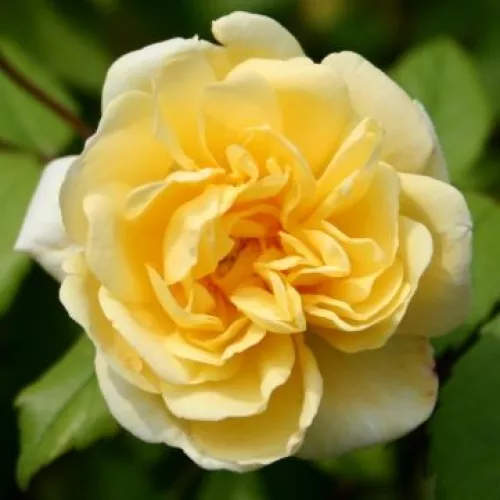
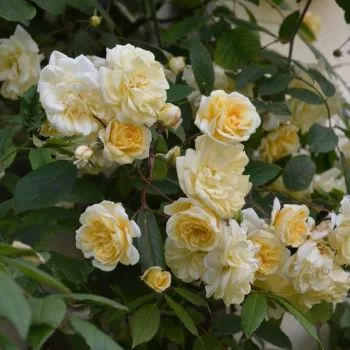
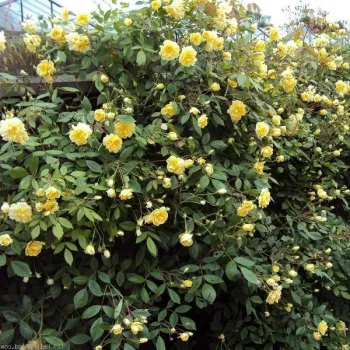
This English climbing rose brings butter-yellow colour and a gently muscat fragrance to walls, arches and pergolas, delivering a romantic cascade of double, cup-shaped blooms all summer on flexible canes that are easy to guide. Its dense, medium-green foliage creates a screening effect, ideal where you want privacy and softness around the home, and the plant’s own-root origin supports a long-lived, steadily maturing structure with reliable regrowth. Over the first three years it focuses on roots, then framework, then full ornamental value, so you can enjoy an increasingly generous display without replanting. In autumn, occasional red hips add a delicate accent, while moderate thorniness makes routine tying-in and training more manageable, even in exposed gardens where strong winds call for secure support and thoughtful positioning.
Usage options
| Target area |
Reasoning |
| Front-garden arch or gate entrance |
Medium-sized, cup-shaped double flowers in clustered trusses quickly create a romantic tunnel of colour over a modest metal or wooden arch, forming a welcoming focal point at the front of the house that looks impressive even in an average-sized garden, ideal for the aesthetically minded beginner. |
| House wall with trellis or wires |
The long, flexible canes reach up to 3–5 m and are easy to fan out on wires or trellis, forming a continuous vertical curtain of foliage and flowers that softens brickwork and integrates the house with the garden, appealing to time-pressed urban homeowners. |
| Pergola or seating arbour |
Dense foliage and repeat-flowering habit give a leafy, flower-spangled canopy that filters light over a bench or dining set, enhancing privacy and atmosphere while occasional hips add autumn interest for those planning a multi-season family retreat. |
| Boundary fence or low privacy screen |
Its naturally climbing habit and 80–140 cm spread allow you to clothe a fence or simple post-and-wire support, creating an informal green-and-yellow screen that helps divide spaces without feeling heavy, attractive to cottage-style garden enthusiasts. |
| Mixed cottage border backdrop |
The pastel yellow flowers blend beautifully with perennials such as bearded iris and bellflowers, while the moderate flower size and soft colour prevent it from overwhelming nearby plants, suiting gardeners who enjoy traditional mixed plantings. |
| Partially shaded side passage or alley |
Tolerance of partial shade means it will still flower and leaf out well where the house or neighbouring buildings limit direct sun for part of the day, helpful for narrow side paths where many roses struggle, reassuring for problem-site gardeners. |
| Large container on terrace or courtyard |
When planted in a substantial 40–50 litre container with a sturdy obelisk or trellis, it offers vertical colour even where soil is poor or space is paved, allowing renters or balcony owners to enjoy a classic climber, attractive for flexible-space users. |
| Wind-exposed coastal or open plots |
Strong, well-anchored own-root growth and a trained framework help it cope with blustery sites when tied securely to supports, providing long-term structure and colour even where wind is a concern, reassuring for weather-aware buyers. |
Styling ideas
- Cottage Archway – Train it over a simple metal arch and underplant with bearded irises and campanulas for a relaxed cottage entrance – for lovers of traditional, flower-rich front gardens
- Sunny Wall Veil – Stretch the canes on horizontal wires across a brick wall to create a soft yellow “veil” of blooms and foliage – for homeowners wanting to soften hard architecture
- Pergola Retreat – Combine this climber on a pergola with feather reed grass and low lavender edging to frame a calm seating nook – for families creating a cosy outdoor room
- Pastel Backdrop – Use it as a tall backdrop behind a border of pink and blue perennials to anchor the planting with gentle, repeating colour – for design-conscious but busy gardeners
- Courtyard Column – Grow it in a 50-litre container with an obelisk to form a vertical accent in paved courtyards or terraces – for urban gardeners seeking height without permanent structures
Technical cultivar profile
| Parameter |
Data |
| Name and registration |
Climbing English Rose; registered as AUScanary with the trade names Auscanary and Malvern Hills; ARS exhibition name Malvern Hills; large-flowered climber class. |
| Origin and breeding |
Bred by David C. H. Austin in the United Kingdom from unnamed seedlings; introduced and distributed by David Austin Roses in 2000 as an English climbing rose. |
| Awards and recognition |
Holds the RHS Award of Garden Merit, indicating reliable garden performance and ornamental value when grown with appropriate care and plant protection in typical UK conditions. |
| Growth and structural characteristics |
Strong climbing habit, 3–5 m high with 0.8–1.4 m spread; dense, glossy medium-green foliage; slightly thorny canes that are flexible enough for training on arches, pergolas, walls or fences. |
| Flower morphology |
Medium-sized, double, cup-shaped flowers with 26–39 petals in clusters; remontant with a lighter second flush; some spent blooms remain and can form hips if not deadheaded promptly. |
| Colour data and phenology |
Soft, pastel yellow flowers: deep golden buds open lemon yellow, then lighten to creamy tones; moderate colour retention and some fading in strong sun; ARS dy, RHS 11C–11D shades. |
| Fragrance and aroma |
Delicately sweet, muscat-like scent of mild strength; noticeable at close range around seating areas or paths but not overpowering, making it suitable near doors and regularly used spaces. |
| Hip characteristics |
Produces hips only occasionally due to double flowers; small, ovoid, 8–13 mm, red and decorative in autumn when present; not typically grown for significant wildlife or culinary use. |
| Resistance and winter hardiness |
Very sensitive to powdery mildew, black spot and rust, needing regular protection; winter hardy to about −26 to −23 °C (RHS H7, USDA 5b, Swedish zone 4) when well established. |
| Horticultural recommendations |
Best on well-drained soil with regular watering in drought; needs systematic disease control and pruning; suitable for arches, walls, pergolas and as a specimen climber with ample support. |
AUSCANARY offers graceful height, pastel yellow blooms and a romantic atmosphere on a long-lived own-root framework, making it a thoughtful choice for gardeners ready to invest some care for lasting beauty.