| Front-garden arch or porch entrance |
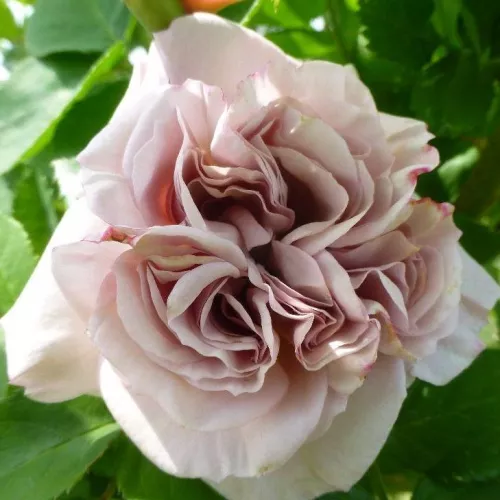
Trained over a modest arch or metal support, its naturally climbing canes and refined silver-lilac blooms frame a classic cottage-style entrance without becoming overbearing. The repeat flushes give a welcoming look from pavement and pathway alike, while own-root vigour ensures the structure slowly thickens for long-term reliability without specialist pruning knowledge, suiting the time-poor beginner |
| House wall or sunny fence line |
Along a warm wall or timber fence, dense, matt foliage creates a soft green curtain that is then punctuated by clusters of smoky, pastel-toned flowers, ideal where you want ornament without excessive brightness. Its climbing habit is easy to tie in along wires, and own-root stability means it settles into the soil and climate, gradually forming a dependable, space-efficient screen that rewards patient homeowners |
| Pergola or walkway in family gardens |
On a garden pergola, medium-vigorous growth covers the structure at a manageable pace, interlacing above seating or a play area with semi-double blooms that filter light rather than blocking it. The repeating, gently scented flowers lend atmosphere for outdoor dining, and the plant’s long-term framework, built on its own roots, means support and training stay straightforward year after year for relaxed gardeners |
| Small group planting as a focal feature |
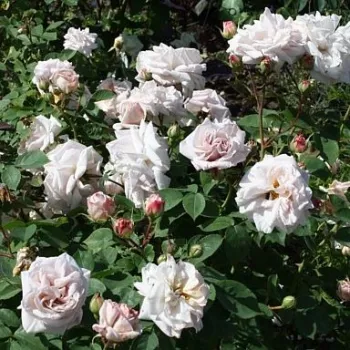
Planted in a small group of two or three, spaced for air and light, this climber forms a softly layered focal point with intertwined sprays of ash-grey lilac flowers. The effect is especially striking against brick or painted render, offering a distinctive yet soothing colour accent. Once established, the own-root base and balanced vigour give a lasting, easy-care statement for design-conscious beginners |
| Mixed cottage border with perennials |
At the rear of a cottage-style border, its cool-toned clusters pair beautifully with airy companions like Mexican daisy or low baby’s-breath, giving a misty, romantic feel above lower planting. Moderate maintenance is largely limited to tying in new shoots and deadheading, while the underlying own-root framework copes well with typical UK border conditions and rewards patient enthusiasts |
| Family seating area or patio backdrop |
Placed behind a bench or terrace, the medium-strength fragrance and softly shaded blooms create a calm backdrop rather than an overpowering display, making it ideal for everyday sitting areas. Growth is upright but pliable enough to fan out along trellis or wires, and as the root system strengthens, the plant becomes more resilient, offering an understated, long-lived companion for relaxed families |
| Large container on balcony or paved courtyard |
In a very large container of at least 40–50 litres, this climber can be grown on a trellis or obelisk where ground planting is not possible, its dense foliage and repeated clusters softening hard surfaces. Own-root resilience means that, provided moisture and feeding are kept steady, it forms a stable, long-lived potted framework that brings vertical interest to compact spaces for busy urban residents |
| Exposed or breezier garden edges |
In slightly more open positions, the dense foliage and well-anchored framework, built up over time from its own roots, help it stand up to typical British wind and rain while still flowering reliably. Once the plant has settled and thickened, yearly pruning can be adapted to taste without compromising its overall form, giving a forgiving, characterful climber for practical-minded owners |