ARTHUR BELL – yellow bedding floribunda rose - McGredy
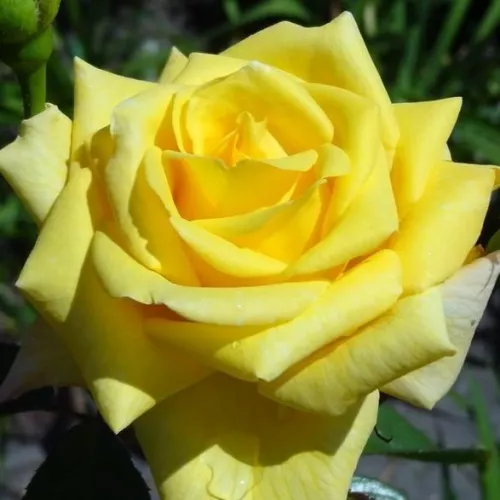
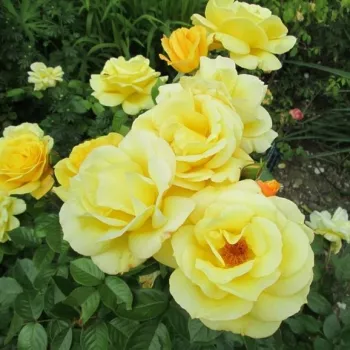
Golden blooms, a strong fruity fragrance and clusters of semi-double flowers make ARTHUR BELL a characterful choice for small British front gardens, especially where its upright, bushy habit helps create tidy, flower-filled beds without fuss. As a floribunda bred for reliable repeat flowering, it brings waves of colour through summer, with good self-cleaning that keeps the plant looking fresh between light deadheading. Own-root plants settle steadily and support a long-lived, resilient bush that regenerates well after pruning. In a typical UK garden with changeable summers and frequent showers, it copes reassuringly well, offering dependable flower production even when exposed to brisk coastal breezes and persistent rain. Over the first few seasons it builds from strong roots to generous shoots and then to its full ornamental value, rewarding patient home gardeners.
Usage options
| Target area | Reasoning |
|---|
| Front garden feature bed |
The bright golden-yellow clusters and upright, compact habit give quick visual impact in modest front gardens, forming a neat, cheerful focus without complicated design work, suiting colour-conscious beginners. |
| Low-maintenance family border |
Good self-cleaning and remontant flowering mean spent blooms drop and new clusters form with limited intervention, providing long-running colour along a family path or lawn edge, ideal for time-pressed homeowners. |
| Classic cottage-style mix |
Pairs elegantly with soft blues, creams and climbing companions, while its own-root resilience supports a long-lived shrub presence that can be shaped loosely to blend into informal cottage-style planting for relaxed gardeners. |
| Small group planting (3–5 shrubs) |
Planting a short run or block at the recommended spacing creates a balanced, unified block of yellow flower heads that holds its shape over the years, appealing to those seeking structured yet simple designers. |
| Cutting for the house |
The large, semi-double flowers with strong, far-scented fruity perfume make attractive, characterful stems for informal vases, letting you bring garden fragrance indoors, pleasing scent-loving enthusiasts. |
| Containers and large pots |
Its upright floribunda habit and steady repeat flowering suit a large 40–50 litre container on a patio or doorstep, where own-root stability and bushy growth provide a reliable, manageable display for pot-focused gardeners. |
| Exposed or breezy sites |
Dense foliage, firm stems and reliable cluster-flowering help it cope well with unsettled British weather, including frequent showers and brisk winds typical of many coastal areas, reassuring practical-minded buyers. |
| Pollinator-aware family spaces |
Semi-double blooms with accessible centres moderately attract visiting insects, complementing wildlife-friendly planting while still prioritising showy garden colour, making it a good compromise for wildlife-aware families. |
Styling ideas
- Cottage-yellow – weave ARTHUR BELL through a border with lavender, catmint and soft pink perennials for a relaxed cottage look – for lovers of traditional, romantic gardens.
- Front-focus – place three shrubs in a gentle arc by the path, underplanted with low evergreen edging, to frame your entrance – for homeowners wanting instant kerb appeal.
- Golden-duo – combine in a bed with white roses or hydrangeas to make the yellow clusters stand out while keeping the scheme calm – for those preferring tidy, coordinated colour.
- Patio-centre – grow one plant in a 40–50 litre terracotta pot with trailing thyme or lobelia to soften the rim – for small-space gardeners using terraces or balconies.
- Climber-partner – set ARTHUR BELL at the base of a light climber, such as clematis, to give a bright, bushy base with delicate flowers above – for gardeners building layered vertical interest.
Technical cultivar profile
| Parameter | Data |
|---|
| Name and registration |
Floribunda bed rose marketed as ARTHUR BELL, a shrub-type cluster-flowering yellow rose; recognised exhibition name Arthur Bell within floribunda and shrub rose show categories. |
| Origin and breeding |
Bred in Ireland in 1959 by Samuel Darragh McGredy IV from ‘Cläre Grammerstorf’ × ‘Piccadilly’; introduced by Samuel McGredy & Son in 1965 for bedding and garden use. |
| Awards and recognition |
Holds the RHS Award of Garden Merit (1993) and received major fragrance and merit awards in the 1960s, underlining its long-standing value as a reliable, show-worthy garden rose. |
| Growth and structural characteristics |
Upright, bushy floribunda shrub reaching about 75–105 cm in height and 65–95 cm spread, with dense, glossy dark green foliage and noticeably thorny stems providing a firm framework. |
| Flower morphology |
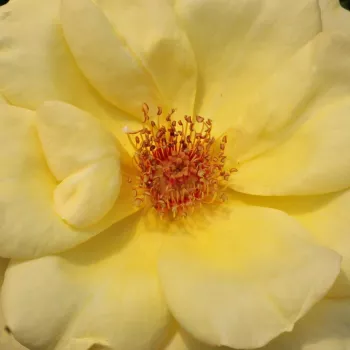
Semi-double, cup-shaped clusters of large blooms (around 7–10 cm), typically 13–25 petals, produced in flushes through the season with good self-cleaning that reduces the need for frequent deadheading. |
| Colour data and phenology |
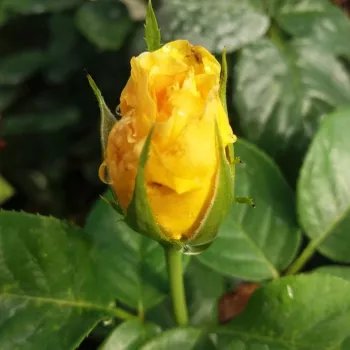
Intense golden-yellow flowers (RHS 12A/10C) emerging sun-yellow and deepening centrally, then fading towards cream in heat; colour holds better in cooler conditions with repeated flowering into late season. |
| Fragrance and aroma |
Strong, far-scented perfume with a slightly sweet, fruity character that is evident both in the garden and on cut stems, giving a pronounced aromatic presence compared with many modern floribundas. |
| Hip characteristics |
Produces small, spherical red hips about 10–14 mm across in moderate quantities, extending ornamental interest into autumn and offering subtle wildlife value without overwhelming the plant. |
| Resistance and winter hardiness |
Fully hardy in the UK (approximately -26 to -23 °C, RHS H7), with moderate resistance to main rose diseases; benefits from regular watering and standard preventive care in warm, dry spells. |
| Horticultural recommendations |
Best in sunny positions for beds, borders, hedging and small groups; spacing 50–90 cm depending on use, with routine feeding, watering and occasional pest and disease management as required. |
ARTHUR BELL offers golden repeat flowering, strong fragrance and a compact, reliable bush on its own roots that will settle in for long-term garden use, making it a thoughtful choice when planning your next planting.