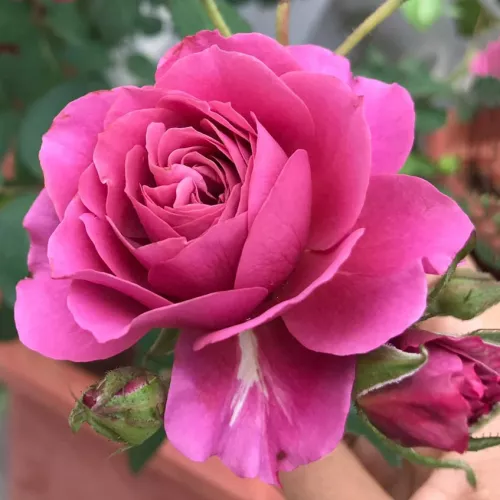
Delicate, cool lavender‑lilac shade with a pinkish‑purple tone. - flowerbed floribunda rose - mild, pleasantly noticeable-scented rose - delicate rose character
– Cool lavender-lilac blooms with pink tones.
– Very double, cupped flowers for elegant displays.
– Compact, bushy habit ideal for bedding.
– Almost thornless shoots for easy handling.
– Good heat and drought tolerance in summer.
– Special feature: Mild, refined fragrance adds a gentle romantic note in beds and bouquets.
Continuous stock – Variety guarantee
pharmaROSA® ORIGINAL 2-litre own-root potted rose
21,20 £
Unfortunately, we are currently unable to ship to the United Kingdom; we only deliver to countries within the European Union. For more information, please contact us!
5(7042)
AOI – pink-lilac shaded bedding floribunda rose - Kunieda
Lavender petals in soft, cool tones give AOI a refined, modern cottage feel, ideal for compact British front gardens where you want reliable, season-long colour without complex design work. Its bushy habit forms a neat, shoulder‑high shrub that sits beautifully in small beds and borders, while the almost thornless stems make day‑to‑day care and cutting blooms more comfortable for you. As an own‑root plant it settles gradually, with roots first, then shoots, then full ornamental value over three years, providing quietly confident, long‑term structure. AOI’s remontant flowering brings repeated flushes of medium, cupped blooms, useful as a specimen or in small groups, and its mild, noticeable rose fragrance adds a gentle, family‑friendly presence. In typical UK conditions it appreciates regular feeding and good air circulation, and, where summer humidity is higher, thoughtful placement and care help it cope better with fungal pressure and unsettled coastal weather.
Aoi rose in close-up, showing its mild, pleasantly noticeable scent.
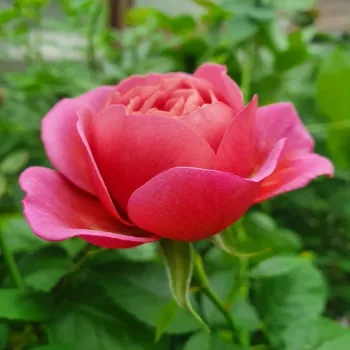
Aoi shows very double, cup-shaped flowers in clustered blooms.
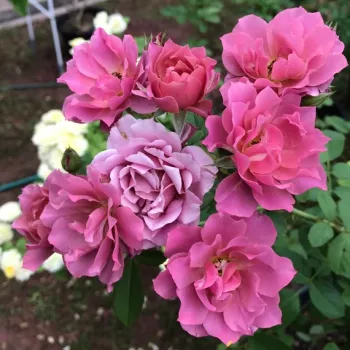
Aoi shows very double flowers with more than 40 petals and a well-filled centre.
Usage options
Target area
Reasoning
Small front‑garden flowerbed by the entrance path
AOI’s compact, bushy growth and medium height create a tidy, welcoming edge along paths and driveways without overwhelming a small front space. The cool lavender‑lilac colour reads clearly from the pavement, giving a smart yet soft first impression for style-conscious beginners.
Feature rose in a cottage-style mixed border
Used singly or in a group of three, AOI works well as a gently upright focal point amid perennials such as scabious and obedient plant, its pastel blooms threading the colour scheme together across the season. The own‑root form underpins long-term structure for time-poor homeowners.
Cutting patch for home arrangements
Very double, cupped flowers on nearly thornless stems make harvesting pleasant and practical, even in a tight space. The mild rose fragrance is noticeable indoors without being overpowering, lending itself to everyday jugs and small vases for family-centred gardeners.
Low, informal hedge along a boundary or path
At the recommended closer spacing, AOI knits into a low, flowered line that softens fences or defines garden rooms. Regular clipping is straightforward thanks to the modest prickles, and the repeated flowering keeps the hedge interesting for practical garden planners.
Raised bed on heavier or poorly drained soils
Planting AOI into a well-prepared raised bed with improved drainage allows gardeners on heavier clay to enjoy its colour and form while keeping roots healthier in wet spells, and makes ongoing care and inspection easier for problem-solving beginners.
Part‑shaded city courtyard or side return
AOI tolerates partial shade, so it can flower reliably where light is limited by neighbouring houses or boundary walls. Its restrained size suits narrow beds, providing colour where larger shrubs would crowd the space, supporting busy urban owners.
Statement container on patio or balcony (40–50 L+)
Planted in a large, 40–50 litre container with quality compost, AOI’s bushy habit and repeat flowering deliver a long season of interest close to seating areas. Almost thornless stems are easier to manage in confined spaces, reassuring balcony and patio gardeners.
Paired planting in exposed or breezy front gardens
Two or three AOI roses mirrored at a gate or beside steps give a balanced, elegant entrance, while their moderate height resists wind rock better than taller shrubs, helping them cope with unsettled coastal and roadside weather for practical front-garden owners.
Styling ideas
Cottage Duo – Combine AOI with Scabiosa caucasica for layered lilac tones and soft shapes in a small front border – ideal for cottage-style enthusiasts seeking coherent colour.
Pastel Ribbon – Plant a low line of AOI along a path, underplanting with pale geraniums to create a gentle, informal edging – suited to families wanting a relaxed but tidy look.
Patio Focus – Grow AOI in a 50 litre terracotta pot with trailing ivy to frame a seating area – perfect for balcony and terrace owners needing flexible structure.
Calm Entrance – Flank a door with matching AOI groups and soft grasses, giving a understated, modern twist on traditional rose entrances – good for design-conscious new homeowners.
Soft Screen – Use a staggered row of AOI with Lythrum salicaria behind to blur a fence line while keeping views light – attractive to those wanting privacy without heaviness.
Technical cultivar profile
Property
Data
Name and registration
AOI – pink-lilac shaded bedding floribunda rose, floribunda bed rose type; collection: Flowerbed rose; current trade name AOI Flowerbed rose Kunieda; exhibition category cut flower and shrub rose.
Origin and breeding
Bred by Keiji Kunieda at Rose Farm Keiji, Shiga Prefecture, Japan; parentage unknown; bred, introduced and registered in 2007, with initial distribution handled by Rose Farm Keiji.
Growth and structural characteristics
Bushy, compact shrub 70–90 cm high with 35–55 cm spread; sparse, mid‑green, slightly glossy foliage; almost thornless shoots; some spent blooms persist and may need light deadheading.
Flower morphology
Medium-sized, very double cupped blooms with 40+ petals borne in clusters; remontant with plentiful second flush; primarily ornamental with limited access to pollen due to the full flower form.
Colour data and phenology
Delicate lavender‑lilac with pinkish‑purple tones; ARS code m, RHS 76C outer, 75D inner; fades slightly in strong sun, remains deeper in cooler weather; pastel buds open to silvery-lilac in shade.
Fragrance and aroma
Displays a mild but pleasantly noticeable rose fragrance with a delicate classical character; suitable for close seating areas and cutting, where the scent is gentle rather than overpowering indoors.
Hip characteristics
Occasionally forms small, spherical orange‑red hips about 8–12 mm in diameter, adding modest late‑season interest; not typically grown for hip production or wildlife feeding value.
Resistance and winter hardiness
Hardy to approximately −21 to −18 °C (USDA 6b, RHS H7); tolerates summer heat but needs watering in prolonged drought; moderately susceptible to powdery mildew and black spot, highly to rust.
Horticultural recommendations
Best in sunny, well-aerated beds with regular feeding and preventative plant protection; suitable for partial shade, borders, hedging and cutting; own-root plants benefit from consistent moisture for establishment.
AOI – pink-lilac shaded bedding floribunda rose - Kunieda offers compact, repeat flowering, comfortable almost thornless cutting stems and long-lived own-root reliability, making it a thoughtful choice for understated, enduring garden colour.
Meaning of Cultivar Name:
The word "Aoi" is the Japanese name for hollyhock and also the forename of the breeder’s granddaughter, after whom the cultivar was named.
Pollinator Attraction:
Very double (40+ petals) flowers attract pollinators only to a limited extent because the fully double flower form conceals the stamens and reduces access to pollen and nectar.
Pollinator-Friendly Rating:
Its heavily double flowers enclose the stamens, making it primarily an ornamental variety.
Our product is a rose grown with pharmaROSA®’s unique cultivation technology!
2-litre, own-root, potted rose.
With a shoot system appropriate to the season.
With a root system that thoroughly permeates the growing medium.
Quality compliant with the requirements of the E.N.A. (European Nurserystock Association).
Supplied in unique packaging that prevents damage.
Can be planted during frost-free periods.
True-to-variety rose bush with a unique identifier.
The pharmaROSA® own-root potted rose is a well-rooted plant that supports reliable establishment when planted and cared for properly, so it can be planted whenever the soil is not frozen.
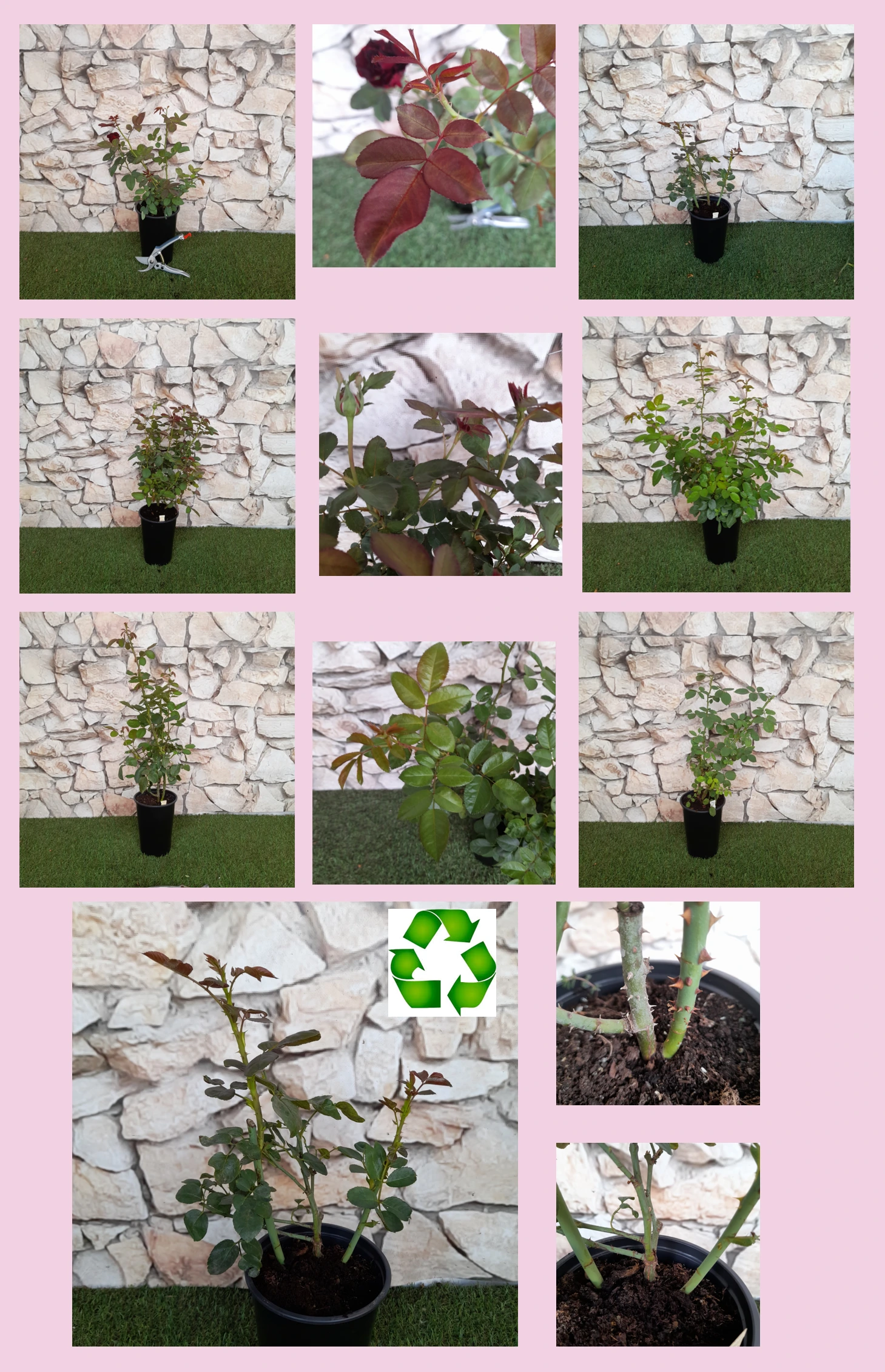
Crop overview: several varieties and growth stages in a short crop section.Shoot system: intensive growth of fresh basal shoots on a young plant.Root system: demonstration of a vigorous root system permeating the growing medium, by removing the pot.Balance: mature plant with root system and shoots in harmony with each other.
Information about the videos
The video series is not a “seasonal showcase”; it illustrates the essence of pharmaROSA® own-root cultivation in a tangible way: how the plant is built up, what the root system is like and how the shoot system regenerates. The recordings were therefore made at different times and with plants at various stages of development, so mixed foliage levels and differing stages of growth may appear in the videos. They are not a ‘sample’ of the batch dispatched, but a visual explanation of how the technology works. The current condition of the rose available to order — typical for the given period and similar to what you can expect to receive in the parcel — is shown in the upper part of the product page.
Pages for private customers Garden roses for the family garden, with minimal care → ORIGINAL® Premium garden roses – instant impact, a truly showpiece garden → EXTRA® Pages for professionals and private customers Roses for public spaces – large areas, sustainable maintenance → NATURAL® Roses for projects – hedge and row planting, fast implementation → RAPID® For professional partners only Production – propagation material for garden roses, wholesale → NEONATAL®
Company details
PharmaRosa Ltd. Company registration number: 01-09-717479 VAT number: 13075314-2-43 Plant health registration no.: HU130721 Bank account (IBAN): HU85117631891388688400000000 BIC (SWIFT): OTPVHUHB Bank name: OTP Bank Nyrt.