ANNELIES – pale pink park rose - Lens
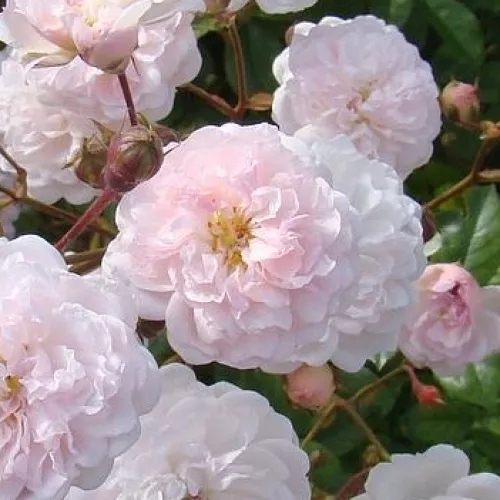
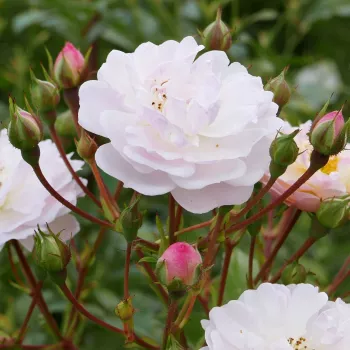
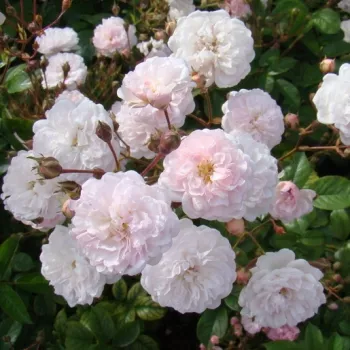
This graceful shrub rose brings elegant structure and soft, romantic colour to family gardens, forming an upright yet compact bush that sits beautifully in front borders and around-the-house plantings. Its clusters of very double, rosette blooms open in a delicate pale-pink that lightens almost to white, creating a calm, harmonious palette that blends effortlessly with cottage-style perennials and classic British front gardens. Bred by Louis Lens, it flowers reliably in generous flushes through summer, rewarding you with steady display for modest effort and only medium maintenance. As an own-root plant, it settles deeply and steadily, building long-term strength and decorative value with each season. It copes well with typical UK weather, from blustery showers to changeable summers, as long as the soil does not dry out completely, supporting waterwise gardening in beds and raised borders. In the first year it concentrates on roots, the second on stronger shoots, and by the third year it shows its full ornamental value. Once established, it offers years of reliable flowering, a quietly enduring presence for small groups, hedges or a single, well-chosen feature rose.
Usage options
| Target area |
Reasoning |
| Front garden focal shrub |
The upright, compact habit and 120–170 cm height make this rose ideal as a near-door or front-path focal point, giving vertical interest without overwhelming a modest plot. Clusters of pale-pink, rosette blooms read clearly from the pavement and soften brick or render, suiting design-conscious but time-poor homeowners and beginners. |
| Low, flowering hedge |
Planted at 50 cm intervals, Annelies knits into a gently formal, flowering hedge, its moderately dense, light green foliage providing structure even between flushes. The pale, pearly flowers create a welcoming boundary that feels friendly rather than fortress-like, ideal for framing family front gardens for homeowners. |
| Small group in mixed border |
Using 3–5 plants at 55 cm spacing produces a soft, informal drift that blends beautifully with cottage favourites like foxgloves and white liatris. The remontant flowering keeps gentle colour in the border across summer, without needing complex pruning or staking, a reassuring choice for style-focused non‑experts. |
| Specimen rose near seating area |
The delicate, discreet fragrance and refined, powder-pink rosettes are best appreciated up close, making Annelies a natural choice beside a bench or terrace. Its moderate prickliness and compact structure keep it manageable in tighter spaces, offering graceful presence for urbanites. |
| Small climbing or pillar training |
On a low obelisk or short pillar, the 170 cm potential height allows light training as a small climber, giving vertical flower without the demands of a full climbing rose. This adds height and romance to narrow borders and doorway corners while staying controllable for busy gardeners. |
| Mass planting in larger beds |
At around 3.3 plants/m², Annelies forms a gently billowing sea of pale-pink clusters, particularly effective in front of darker shrubs or evergreen backdrops. The moderate maintenance requirement and reliable remontant habit mean larger areas remain attractive without intricate care, suiting practical planners. |
| Raised beds on heavier soils |
In heavy clay or wetter patches, planting in raised or improved beds lets its roots establish steadily while protecting against waterlogging; provided the soil never dries out completely, it flowers well through warm spells. This balance of tolerance and need for moisture suits thoughtful gardeners. |
| Large container for patios and courtyards |
In a 40–50 litre or larger container with good drainage, the upright, compact habit creates a tidy, long-lived patio feature. Regular watering and feeding support its repeat flowering, while the own-root form builds a stable, resilient shrub over time, ideal for container-reliant owners. |
Styling ideas
- Cottage Drift – Plant 3–5 Annelies in a loose triangle with digitalis and white liatris to echo soft cottage borders in front gardens – for lovers of nostalgic, painterly schemes.
- Pastel Hedge – Create a low border hedge along a drive or front path, underplanting with soft grasses to highlight the pale-pink rosettes – for those wanting structure without harsh formality.
- Pearl Patio – Grow a single plant in a 50 litre container with trailing thyme or campanula around the rim for a calm, elegant terrace focus – for balcony and courtyard dwellers.
- Entrance Pillar – Train one or two bushes loosely around a short obelisk by the front door to bring height and repeated blossom through summer – for hosts who value a welcoming doorway.
- Waterwise Grove – Group Annelies with drought-aware shrubs like Berberis thunbergii ‘Red Rocket’, using mulch and careful watering to support bloom in warm spells – for practical, environmentally minded gardeners.
Technical cultivar profile
| Parameter |
Data |
| Name and registration |
Shrub, Hybrid Musk park rose; registered as LENplero, marketed as Annelies – pale pink park rose. ARS exhibition name Annelies; premium bronze quality rating for garden use. |
| Origin and breeding |
Bred by Louis Lens, Lens Roses Nursery, Belgium. Introduced and registered in 2000, with Belgian origin; parentage not recorded but aligned with Hybrid Musk shrub characteristics. |
| Awards and recognition |
Recognised early after introduction with a silver medal at Rome in 2000, confirming its ornamental value and garden appeal among European shrub rose introductions. |
| Growth and structural characteristics |
Upright, compact shrub to around 120–170 cm high and 60–100 cm wide. Moderately dense, light green, slightly glossy foliage; moderately thorny stems, suitable for hedging, beds and light pillar training. |
| Flower morphology |
Very double, rosette-shaped blooms with more than 40 petals, borne in large clusters of small flowers. Remontant habit with abundant second flush, giving repeated decorative effect through the main season. |
| Colour data and phenology |
Pale-pink flowers (RHS 65C outer, 155D inner) opening powder-pink then lightening almost to white. Moderate colour retention; in strong sun it fades more quickly, giving a soft, pearlescent overall impression. |
| Fragrance and aroma |
Discreetly scented rose with a delicate, elegant fragrance character that does not overpower nearby seating areas; primarily grown for visual effect rather than strong scent in mixed plantings. |
| Hip characteristics |
Produces a moderate crop of small, spherical orange-red hips, around 6–10 mm across, adding subtle autumn interest and seasonal texture without dominating the shrub’s overall appearance. |
| Resistance and winter hardiness |
Hardy to around −21 to −18 °C (RHS H7, USDA 6b, Swedish zone 3). Moderate resistance to black spot, powdery mildew and rust; benefits from basic hygiene and occasional preventive care. |
| Horticultural recommendations |
Best in sunny sites with soil that does not dry out. Medium maintenance; allow 50–55 cm spacing in hedges or mass planting and 90 cm as a specimen. Own-root plants establish steadily for long-term garden use. |
ANNELIES – pale pink park rose - Lens offers a compact, upright habit, gentle repeat flowering and long-lived own-root reliability, making it a considered choice for relaxed, low-fuss family gardens.