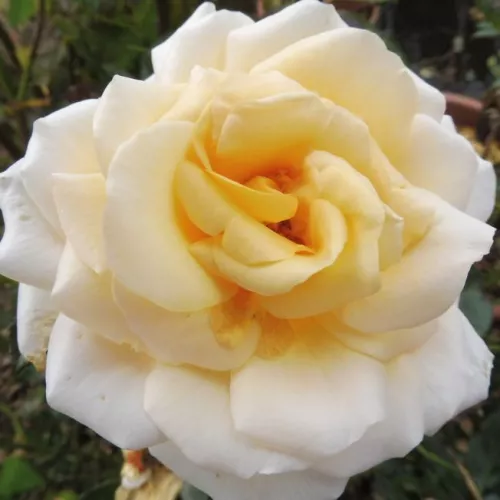
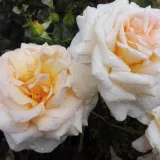
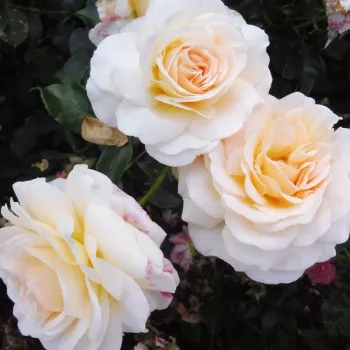
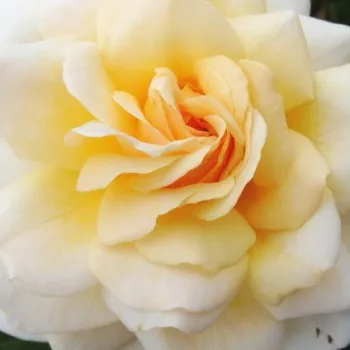
Pale creamy-white base colour on the outer surface of the petals, gently warming to a subtle peachy-yellow hue towards the centre. - bedding floribunda rose - strong, well-scented rose - fresh, citrusy aroma
– Strong, fresh citrusy fragrance delight.
– Elegant cream‑yellow blooms with apricot blush.
– Compact, upright habit for beds and borders.
– Excellent resistance to major rose diseases.
– Hardy to around −20 °C, reliable in winter.
– Special feature: Abundant repeat flowering with a generous second flush.
Lively, vibrant garden – Natural plant form
pharmaROSA® ORIGINAL 2-litre own-root potted rose
18,70 £
Unfortunately, we are currently unable to ship to the United Kingdom; we only deliver to countries within the European Union. For more information, please contact us!
4(6071)
ANGIE – cream‑yellow bedding floribunda rose – Delbard
Fragrant and generously flowering, Angie settles into family gardens as a compact, reliable border rose that copes well with breezy, rain‑prone sites and typical British soils, especially where heavier ground benefits from careful drainage. Its compact habit keeps paths and front‑garden edges neat, while glossy foliage and self‑cleaning blooms reduce the need for deadheading and constant tidying. As an own‑root plant it is naturally durable, building up a stable framework that rebounds from pruning and minor weather damage over the years. You can expect a calm development rhythm – roots first, then top growth, and by the third year a full display of ornamental impact. The strong citrus‑fresh perfume brings classic romance to small gardens, yet care remains reassuringly simple for time‑pressed or less experienced gardeners.
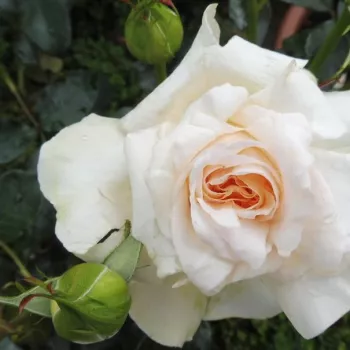
Closed bud of Angie, a cream-yellow bedding floribunda rose.
Freshly opened Angie flower with pastel cream outer petals and a peach-yellow centre.
Cup-shaped, double blooms of ANGIE with a soft cream-yellow tone.
Closed bud of Angie, cream-yellow with a slight yellow tint at the tip.
Usage options
Target area
Reasoning
Front‑garden feature by the entrance path
Angie’s strong, fresh citrus scent and generously double blooms create a welcoming feel right by the front door without demanding complex care. Its repeat flowering ensures interest across the season with minimal deadheading, giving early success to beginners.
Low, tidy border along drives or paths
The compact, upright habit and moderate height make a neat edging that stays within bounds, ideal for narrow side gardens and front paths. Plants knit into a low hedge when spaced correctly, suiting owners who enjoy orderly spaces yet remain busy householders.
Small mixed bed in a family back garden
Consistent repeat flowering and good disease resistance provide a long season of colour among perennials and shrubs, without constant spraying or fuss. The rose gradually integrates into cottage‑style plantings, working well for aesthetically focused but time‑limited gardeners.
Cutting patch corner for home bouquets
Large, double, cream‑yellow flowers with a soft apricot blush and strong fragrance make appealing stems for the house. Reliable rebloom means you can cut without stripping the garden of colour, which suits home makers who like simple, home‑grown arrangements.
Small group planting for focal impact
Planting three to five plants together produces a concentrated block of scented colour, with self‑cleaning blooms keeping the display presentable between visits. This offers high visual reward from a compact footprint, ideal for design‑minded but practical owners.
Part‑shaded side garden or near taller shrubs
Angie tolerates partial shade better than many roses, so it copes near fences, sheds or taller planting where sunlight hours are limited. The plant maintains healthy, glossy foliage and still flowers well, rewarding space‑constrained urban gardeners.
Large patio container or courtyard pot
In a 40–50 litre container with good drainage, Angie’s compact stature and upright habit adapt well, giving scented colour close to seating areas. Own‑root vigour and resilience help it handle the more variable moisture of pots, reassuring balcony and terrace owners.
Informal hedge or row in exposed, rainy sites
Good resistance to black spot, mildew and rust, together with a sturdy, upright framework, means Angie holds its own where wind and frequent showers might trouble fussier roses, especially if heavier soils are improved for drainage, supporting low‑maintenance focused families.
Styling ideas
Cottage‑border – Combine Angie with blue calamint and soft pink achillea for a relaxed, pastel cottage edge that still reads as tidy – ideal for lovers of classic front‑garden charm.
Scented‑welcome – Plant a short row by the front path, repeating Angie at regular intervals so fragrance greets you daily – suited to busy professionals wanting instant uplift.
Compact‑hedge – Use close spacing to create a low, cream‑yellow hedge defining driveways or play‑lawn edges – good for families wanting structure without high maintenance.
Patio‑centre – Place a single Angie in a large clay pot surrounded by gravel and low herbs so fragrance and colour focus around outdoor seating – perfect for small‑space urban gardeners.
Soft‑contrast – Pair Angie with a dwarf smoke bush for deep purple foliage contrast that highlights the rose’s creamy blooms – attractive for design‑conscious owners seeking gentle drama.
Technical cultivar profile
Parameter
Data
Name and registration
Floribunda bedding rose; registered as DELchacré, marketed as Angie Grands Parfums DELchacré, with Téléthon® as ARS exhibition name; part of the Grands Parfums fragrant shrub and bedding range.
Origin and breeding
Bred by Georges Delbard in France, 2003; introduced by Delbard/Georges Delbard SA in 2005. Parentage is not published, but selection focused on fragrance, garden performance and disease resistance.
Growth and structural characteristics
Compact, upright shrub around 85–115 cm high and 40–60 cm wide, with moderately dense, glossy dark green foliage. Moderately thorny shoots; maintains a bushy, rounded outline suitable for borders and small hedges.
Flower morphology
Large, double, cup‑shaped blooms with approximately 26–39 petals, borne in clusters. Remontant, with a notably abundant second flush in summer, then further repeat blooms given adequate water and nutrition.
Colour data and phenology
Cream‑yellow flowers, RHS 158C and 23A tones; pastel cream outer petals with warmer peach‑yellow centres. Blooms pale gently to off‑white in sun while retaining a soft apricot hint, giving a nuanced, multi‑stage colour effect.
Fragrance and aroma
Strong, fresh, citrusy perfume characteristic of the Grands Parfums collection. Well‑scented in both garden and vase, with fragrance noticeable at a short distance in still air, particularly around seating or entrance areas.
Hip characteristics
Hip production is light; occasional small, ovoid, orange‑red hips around 12–18 mm may form later in the season. These are mainly ornamental and do not significantly detract from repeat flowering or garden display.
Resistance and winter hardiness
Rated H7, generally hardy to approximately −21 to −18 °C (USDA 6b). Good resistance to powdery mildew, black spot and rust. Tolerates summer heat but benefits from watering through extended dry spells for best performance.
Horticultural recommendations
Suited to borders, low hedging, specimens and cutting. Plant 45 cm apart for bedding, 35 cm for hedges, 75 cm as specimens; around 5 plants/m². Responds well to standard spring pruning and light deadheading where desired.
ANGIE – cream‑yellow bedding floribunda rose – Delbard rewards you with strong citrus fragrance, compact repeat flowering and resilient own‑root growth that matures steadily, making it a thoughtful choice for long‑term family gardens.
Detailed product attributes
Product Identification Data
Product Name:
ANGIE – cream‑yellow bedding floribunda rose - Delbard
Product Type:
pharmaROSA® ORIGINAL - 2-litre own-root potted rose
Flower Colour Description:
Pale creamy-white base colour on the outer surface of the petals, gently warming to a subtle peachy-yellow hue towards the centre.
Closed Bud:
Light cream-coloured, with a slightly yellowish tint at the tip.
Newly Opened Flower:
The outer petals are pastel cream with a brighter peach‑yellow centre inside.
Full Bloom:
Even creamy yellow, with a soft apricot blush in the centre.
Before Fading:
The petals fade to off-white, the peach colour is only faintly visible.
Pollinator Attraction:
Its very double (highly filled) flower form limits stamen accessibility and therefore makes it poorly attractive to pollinating insects.
Our product is a rose grown with pharmaROSA®’s unique cultivation technology!
2-litre, own-root, potted rose.
With a shoot system appropriate to the season.
With a root system that thoroughly permeates the growing medium.
Quality compliant with the requirements of the E.N.A. (European Nurserystock Association).
Supplied in unique packaging that prevents damage.
Can be planted during frost-free periods.
True-to-variety rose bush with a unique identifier.
The pharmaROSA® own-root potted rose is a well-rooted plant that supports reliable establishment when planted and cared for properly, so it can be planted whenever the soil is not frozen.
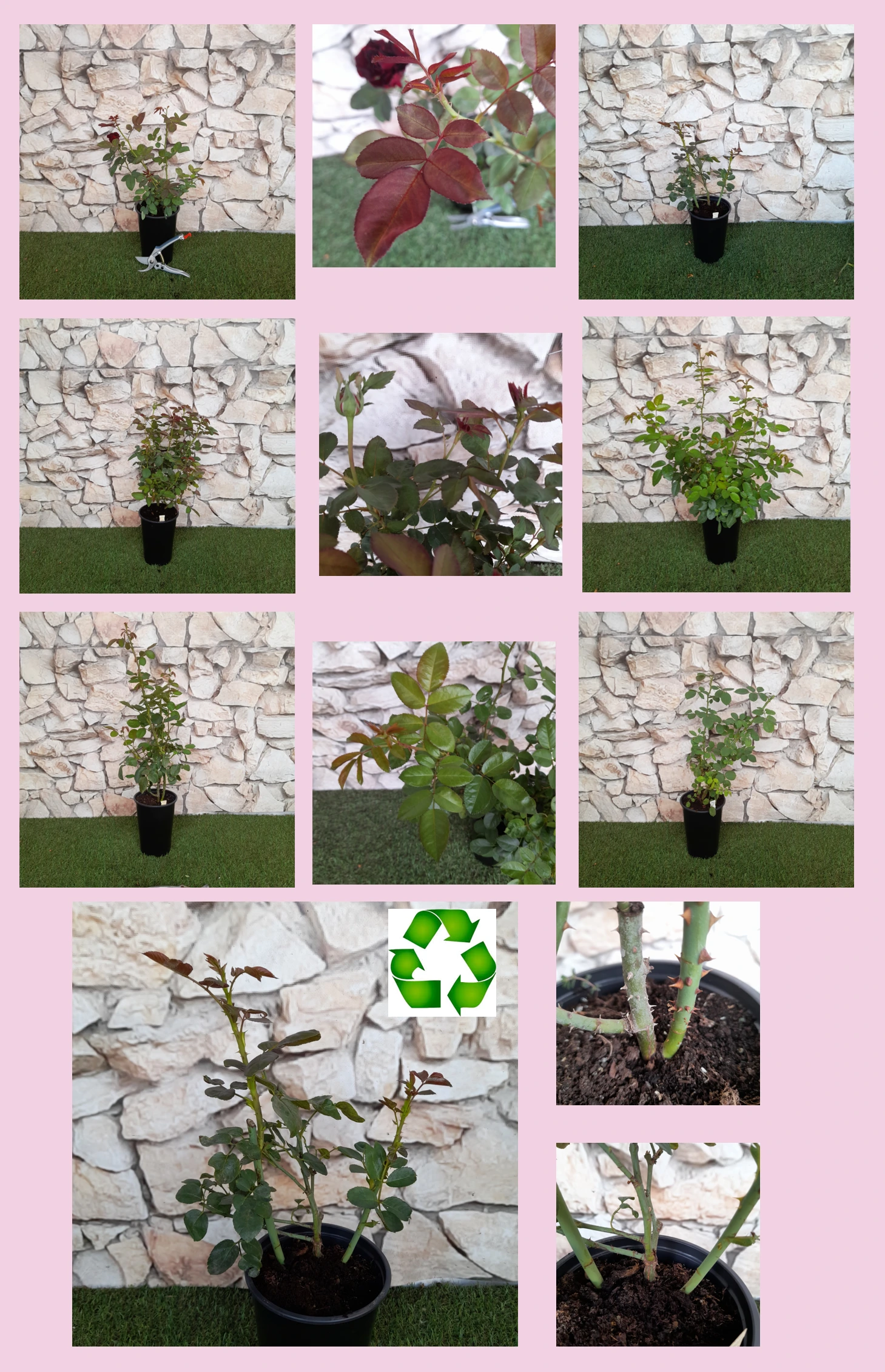
Crop overview: several varieties and growth stages in a short crop section.Shoot system: intensive growth of fresh basal shoots on a young plant.Root system: demonstration of a vigorous root system permeating the growing medium, by removing the pot.Balance: mature plant with root system and shoots in harmony with each other.
Information about the videos
The video series is not a “seasonal showcase”; it illustrates the essence of pharmaROSA® own-root cultivation in a tangible way: how the plant is built up, what the root system is like and how the shoot system regenerates. The recordings were therefore made at different times and with plants at various stages of development, so mixed foliage levels and differing stages of growth may appear in the videos. They are not a ‘sample’ of the batch dispatched, but a visual explanation of how the technology works. The current condition of the rose available to order — typical for the given period and similar to what you can expect to receive in the parcel — is shown in the upper part of the product page.
Pages for private customers Garden roses for the family garden, with minimal care → ORIGINAL® Premium garden roses – instant impact, a truly showpiece garden → EXTRA® Pages for professionals and private customers Roses for public spaces – large areas, sustainable maintenance → NATURAL® Roses for projects – hedge and row planting, fast implementation → RAPID® For professional partners only Production – propagation material for garden roses, wholesale → NEONATAL®
Company details
PharmaRosa Ltd. Company registration number: 01-09-717479 VAT number: 13075314-2-43 Plant health registration no.: HU130721 Bank account (IBAN): HU85117631891388688400000000 BIC (SWIFT): OTPVHUHB Bank name: OTP Bank Nyrt.