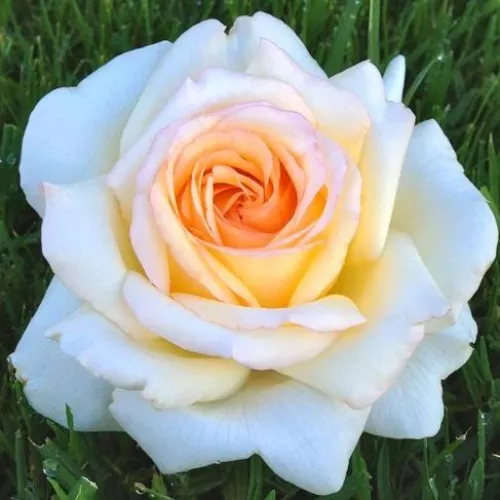
| Feature rose near the front door |
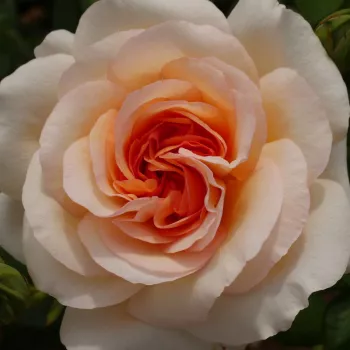
Planted as a focal shrub by the entrance, Anastasia’s tall, upright habit and large, high‑centred blooms create an immediate sense of formality and welcome. The creamy, off‑white flowers read clearly from the pavement, particularly against darker brick or evergreen backdrops. Regular deadheading keeps the plant tidy and encourages repeat flushes, making it well suited to homeowners who enjoy a smart front garden with classic character. Best for style‑conscious beginners. |
| Cutting patch in a family garden |
If you would like reliable stems for the vase without managing a professional cutting garden, Anastasia offers long, straight, sparsely thorned shoots that are easy to harvest. The flowers hold their shape beautifully in arrangements, with high‑centred buds opening slowly and a strong citrus‑fruity scent that carries indoors. Plant in a sunny, well‑drained strip or raised bed, give regular feeding and plant protection, and you will have elegant blooms to cut throughout the season. Ideal for home florists. |
| Small specimen rose in a cottage border |
Used singly, Anastasia stands as a vertical accent among looser cottage perennials such as foxgloves and airy baby’s breath. Its dense, dark green foliage forms a solid backdrop for lighter companions, while the cream flowers sit comfortably with pinks, mauves and blues. Own‑root growth means the bush gradually thickens at the base, maintaining its presence year after year with simple winter pruning and seasonal care. A good choice for cottage‑garden enthusiasts. |
| Group planting of three to five roses |
In a small to medium family garden, a group of three to five Anastasia plants spaced at around 60–90 cm creates a structured, rose‑dominant bed without complex design work. Repeated pockets of the same creamy bloom colour give a calm, cohesive look that is easy to coordinate with paving, gravel or lawn. With consistent watering, feeding and timely spraying, the group will build into a unified, long‑lived feature that anchors the garden picture. Best for low‑complexity border planners. |
| Sunny mixed border along a path or drive |
Anastasia performs best in a bright, open position, where sun can fully develop flower colour and scent. Planted along a path or drive, the strong fragrance is noticeable as you walk past, and the upright, tidy structure means it does not sprawl into the route. Underplant with low perennials or groundcovers to hide bare stems and reduce weeding, keeping maintenance straightforward while still supporting a classic rose presence. Suited to fragrance‑loving walkers. |
| Raised bed or improved soil on heavy ground |
Where gardens sit on heavier clay or less‑than‑ideal soil, Anastasia responds well to being planted into improved, well‑drained beds or raised sections that prevent water from lingering around the roots and help it cope gracefully with wet, windy spells in coastal‑influenced areas. Once the root system has settled, the own‑root framework supports steady top growth and dependable flowering, provided feeding and plant protection are kept regular. Appropriate for problem‑soil owners. |
| Formal pair planting with evergreens |
Two Anastasia roses flanking steps, a gate or a seating area can echo the feel of a traditional formal garden on a smaller, family‑friendly scale. Their upright habit and consistent flower shape read well against clipped box, yew or other evergreen forms, while the off‑white colour keeps the scheme restrained and elegant. With careful pruning to maintain height and outline, they provide a long‑term structural motif around the house. Best for symmetry‑seeking gardeners. |
| Large container on terrace or patio |
In a 40–50 litre or larger container with quality compost and drainage, Anastasia becomes a movable highlight for terraces and patios, bringing its cut‑flower aesthetic and scent right up to seating areas. Container culture simplifies soil improvement and moisture control, which is especially helpful where garden beds are limited or heavily compacted. With seasonal feeding and routine plant protection, the own‑root plant continues to renew its framework over time. Ideal for space‑limited urbanites. |