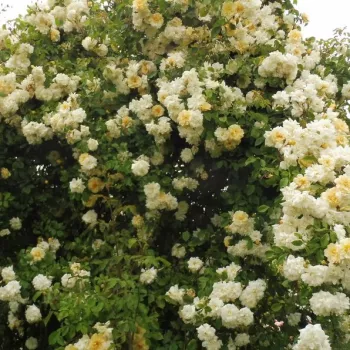
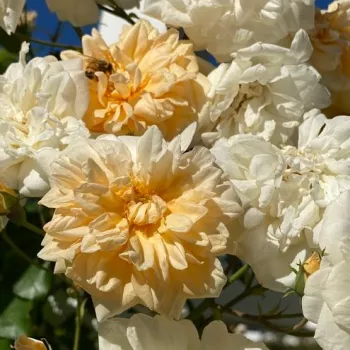
ALISTER STELLA GRAY – pale yellow rambler climbing rose - Gray & Dickson
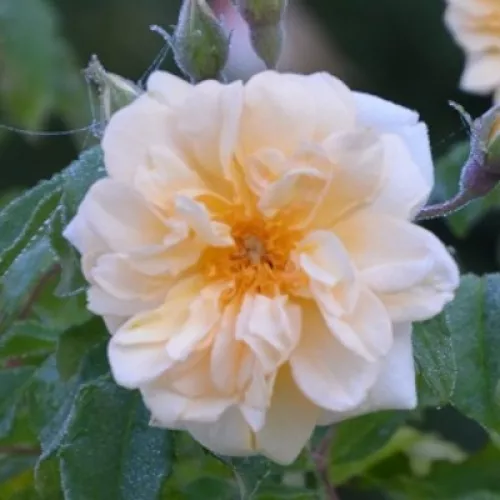
This classic rambler offers romantic clusters of soft lemon-yellow blooms that fade to creamy white, bringing a gentle, nostalgic charm to pergolas, arches and walls with remarkably low maintenance. Its excellent resistance to common rose diseases helps it stay healthy and attractive without complicated spraying routines, even in more humid British summers where fungal problems are frequent. The supple, medium-length canes are easy to guide, so you can shape the plant to suit your space, whether you are covering a small arch or softening a fence. As an own-root plant it establishes steadily and endures, supporting a long garden life with dependable flowering from year to year. With good heat and drought tolerance, it copes well with warmer, drier spells while still producing sprays of clusters. The medium tea-and-fruit fragrance adds another layer of enjoyment when you pass by a doorway or seating area. Over the first few seasons it moves naturally from root-building to stronger shoot growth and finally to full ornamental impact, so you can simply plant it, keep it watered, and watch it mature into a graceful cottage-style feature.
Usage options
| Target area | Reasoning |
|---|
| Pergola over a seating area |
Ideal where you want a romantic, overhead canopy of soft yellow clusters, but do not have time for complex pruning or spraying; its low maintenance and reliable repeat flowering suit relaxed outdoor living for the busy homeowner. |
| South- or west-facing house wall |
Heat- and drought-tolerant growth makes it well suited to sun-trapping walls, while good disease resistance keeps foliage presentable close to windows and doors, offering long-lived structure for the style-conscious gardening beginner. |
| Archway at the front garden entrance |
Graceful, easily trained canes and small, clustered blooms create a welcoming cottage-style arch without becoming overbearing, giving a tidy yet romantic first impression that works well for compact urban front-garden owners. |
| Pillar or obelisk in a mixed border |
Moderately dense foliage and steady, remontant flowering let it clothe a pillar attractively while other perennials flower below, with simple tying-in and occasional deadheading enough for those who want structure without specialist knowledge. |
| Informal cottage-style boundary or screen |
Its long lifespan as an own-root rambler makes it a conscious, enduring investment for softening fences or creating a light privacy veil, supporting years of gentle colour and scent for practically minded garden planners. |
| Small group planting near a patio |
Planted in a loose group against a trellis, the repeat-flowering clusters and tea-fruity fragrance provide season-long interest close to seating, while straightforward care leaves more time to simply enjoy the garden for relaxed rose lovers. |
| Raised bed or improved clay area with support |
Works well where soil has been improved or raised to aid drainage on heavier ground, with its robust root system anchoring the plant securely and maintaining ornamental value under typical family-garden conditions for practical plot owners. |
| Large container with obelisk (minimum 40–50 litres) |
In a generous container with a strong support, it can be trained into an elegant vertical accent on patios or balconies, combining reliable flowering and manageable vigour for space-conscious, design-focused city garden keepers. |
Styling ideas
- COTTAGE ARCH – Train over a narrow arch with lavender and nepeta at the base for a soft, romantic entrance – ideal for lovers of traditional cottage gardens.
- SUNNY WALL – Pair on a south-facing wall with deep blue clematis weaving through the pale yellow clusters – suited to homeowners wanting impact with low day-to-day work.
- FRONT-DOOR FRAME – Grow on a light trellis either side of a doorway, underplanted with scented herbs – perfect for small front gardens seeking a welcoming, fragrant focus.
- PERGOLA RETREAT – Let it scramble along a simple pergola, with shade-tolerant perennials beneath – good for families wanting a cosy seating nook with minimal rose care.
- CONTAINER OBELISK – Plant in a 50-litre tub with an obelisk and airy grasses around – a strong choice for balcony or courtyard gardeners wanting vertical colour in limited space.
Technical cultivar profile
| Parameter | Data |
|---|
| Name and registration |
Alister Stella Gray, also known as Alexander Hill Gray; an historical rambler-type climbing rose used today under the climbing rose commercial description in garden trade. |
| Origin and breeding |
Bred in the United Kingdom by Alexander Hill Gray and Alexander Dickson II around 1894, from ‘William Allen Richardson’ × ‘Madame Pierre Guillot’, later introduced by several UK and overseas firms. |
| Growth and structural characteristics |
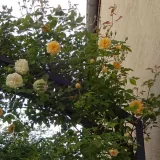
Rambling climbing habit with moderately dense, mid-green glossy foliage; typical height 200–360 cm and spread 200–400 cm, with moderately thorny canes suitable for training on supports. |
| Flower morphology |
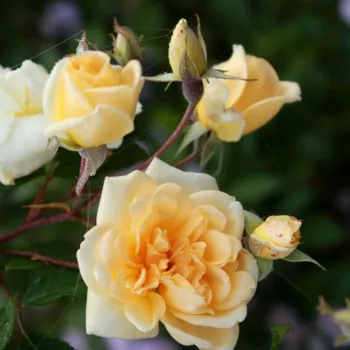
Semi-double, cup-shaped blooms with 13–25 petals, borne in clusters on short stems; small flower size (around 0.5–1.5 inches), with good remontancy and an abundant second flush in season. |
| Colour data and phenology |
Buds open egg-yellow to buttery lemon (RHS 8C outer, 11D inner), then gradually fade to creamy white; colour holds reasonably well, though flowers pale more quickly under strong sunlight. |
| Fragrance and aroma |
Medium-strong, pleasantly balanced scent combining soft tea notes with a light fruity character; noticeable at close range around seating areas or entrances without being overpowering. |
| Hip characteristics |
Rose hips are generally sparse on this cultivar, with only occasional formation; ornamental effect in autumn is usually minimal and not a primary feature of the plant in garden settings. |
| Resistance and winter hardiness |
Rated H7 with hardiness around -26 to -23 °C and USDA Zone 5b; good resistance recorded to powdery mildew, black spot and rust, with excellent heat and drought tolerance in established plants. |
| Horticultural recommendations |
Best on pergolas, arches, pillars and walls; plant 225–380 cm apart depending on use, allow own-root plants time to establish, and deadhead weakly self-cleaning blooms to encourage neatness and repeat. |
Alister Stella Gray offers easy-care climbing charm with reliable repeat flowering and enduring own-root strength, making it a thoughtful choice for long-term, low-effort garden structure and gentle scent.