ALISON™ 2000 – golden-orange bedding floribunda rose - Liebig
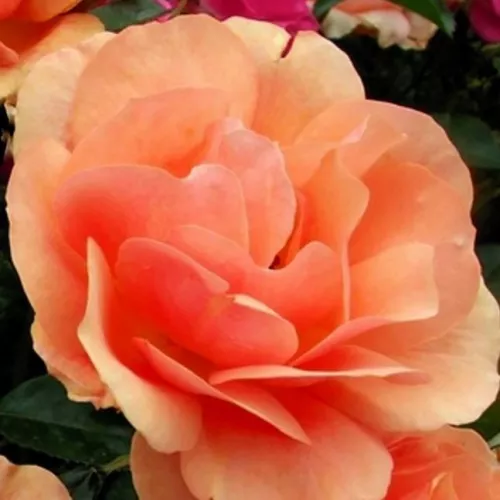
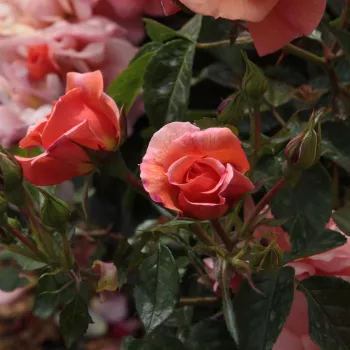
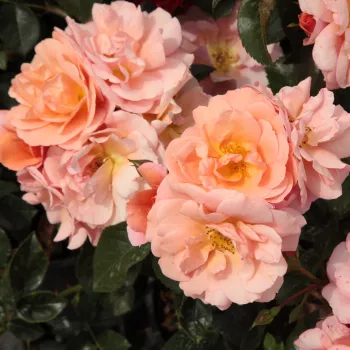
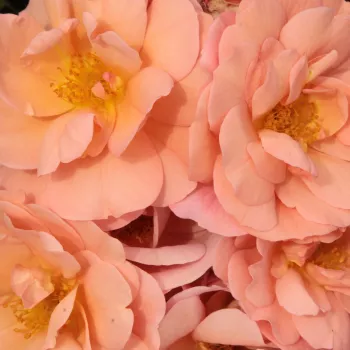
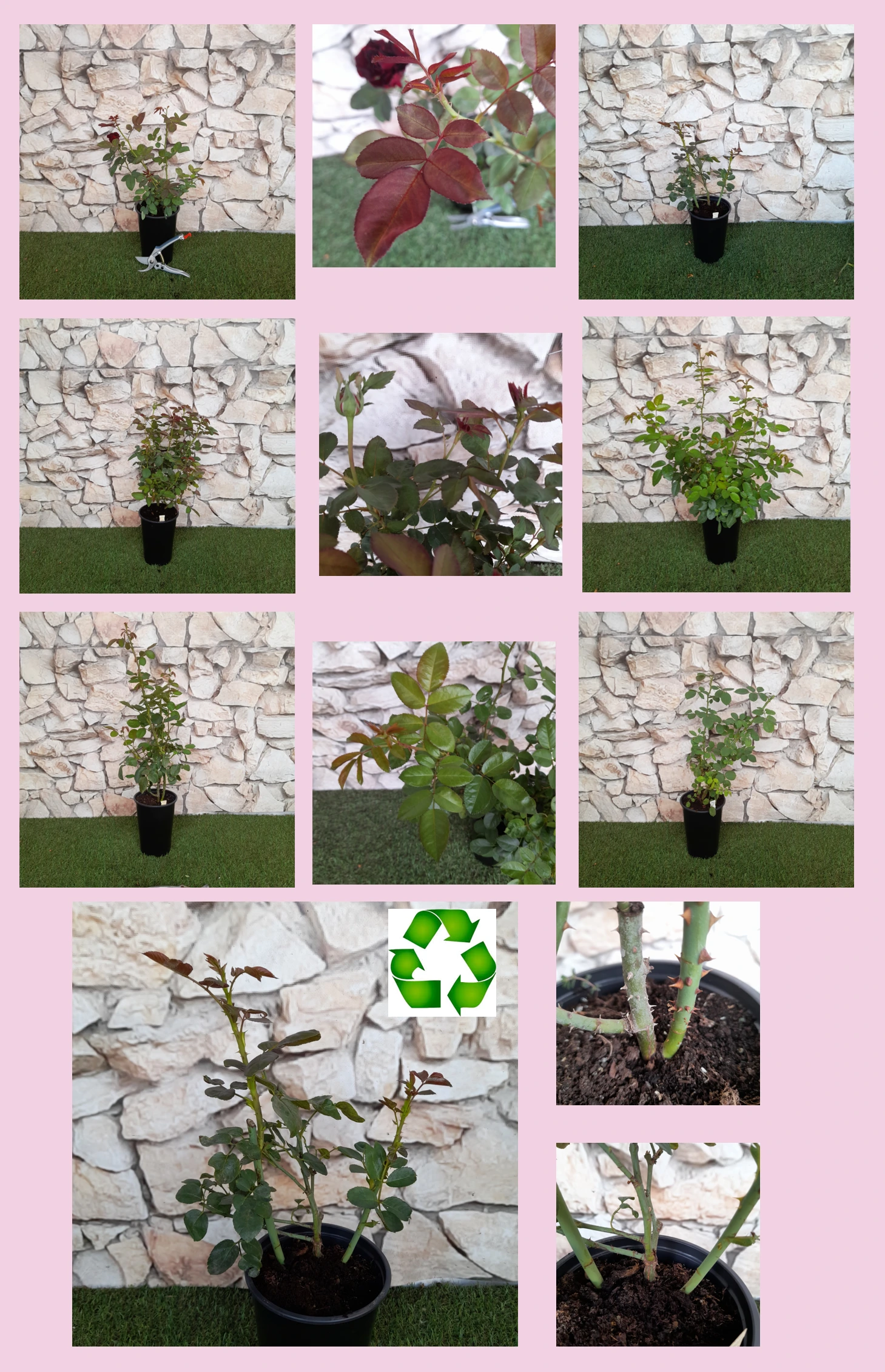
Compact and perfectly proportioned for smaller beds, ALISON™ 2000 forms a neat, bushy shrub that suits classic British front gardens and cottage-style borders. Its semi-double, golden-orange blooms appear in generous clusters, then gently soften through peach and creamy tones, giving long, changing colour interest across the season. With a mild, delicate fragrance and flowers that leave stamens partly accessible, it offers a considerate, partly pollinator-friendly display for family gardens. Medium disease resistance, including good tolerance to powdery mildew and black spot, supports genuinely easy-care maintenance. As an own-root plant it settles deeply, building a stable, long-lived structure that recovers well after pruning and hard winters, while coping reliably with wetter, wind-exposed British sites where good drainage is provided. In a 2-litre pot it is already well rooted: over time you see roots strengthen, then top growth fill out, and by the third year its full ornamental potential comes through in a balanced, enduring bush.
Usage options
| Target area |
Reasoning |
| Small front garden bed by the path |
The bushy, compact habit keeps this floribunda tidy and in scale with smaller front gardens, creating a low hedge of warm golden-orange clusters that will not overwhelm the space or the paving. Easy outline and modest height suit busy beginners. |
| Cottage-style mixed border |
Repeated clusters of semi-double blooms provide a long, shifting colour show from vivid orange to creamy yellow, blending naturally with pastel perennials and traditional cottage plants for an informal yet harmonious look. Ideal for colour-focused homeowners. |
| Family play garden edge |
The rounded, dense foliage and relatively low stature give a stable, well-filled outline that frames lawns and play spaces without becoming leggy, helping the planting keep its shape over many seasons with modest pruning. Reassuring choice for practical families. |
| Low-maintenance rose bed |
Medium disease resistance, including good tolerance of powdery mildew and black spot, means fewer interventions, so with basic watering and feeding you can keep a smart, flowering bed without specialist care or frequent spraying. Suitable for time-poor gardeners. |
| Pollinator-friendly corner near seating |
Semi-double flowers with accessible stamens moderately attract pollinators, adding gentle movement and life around benches or patios while still reading as a classic bedding rose rather than a wildflower planting. Appealing for wildlife-aware owners. |
| Exposed suburban or coastal-style plots |
The compact, well-branched framework helps the shrub stand firm in wind and rain, provided the soil is well drained, giving more reliable structure and flowering on typical British, weather-exposed sites. Helpful for wind-battered garden sites. |
| Large containers and patio planters |
Its neat size and dense foliage suit big containers of 40–50 litres or more, where the changing flower colours become a strong focal point close to the house, while own-root growth helps it re-leaf well after seasonal pruning. Good option for balcony and patio users. |
| Small group planting in front of shrubs |
Planting three to five together gives a low, cohesive band of bronzy orange flowering that masks bare stems of taller shrubs, with the own-root framework filling out year by year into a durable, balanced foreground. Designed for structure-conscious planners. |
Styling ideas
- Cottage-border trio – Plant three ALISON™ 2000 in a gentle arc with soft blue catmint and lavender to echo the warm flower tones – ideal for lovers of relaxed cottage borders.
- Front-path ribbon – Line a short path with a single, evenly spaced row, underplanting with low thyme to keep edges neat – suitable for homeowners wanting tidy structure without fuss.
- Patio-focal pot – Use one plant in a 50-litre terracotta container with trailing ivy and white lobelia for a long-season, compact patio accent – perfect for balcony and terrace gardeners.
- Pollinator-pocket – Combine with blue globe thistle and Japanese anemone to extend nectar interest while keeping a classic rose look – appealing to wildlife-minded families.
- Warm-toned hedge – Space plants closely in a short hedge in front of evergreen holly for a glowing bronze-orange band – a good fit for those planning structured, low rose features.
Technical cultivar profile
| Parameter |
Data |
| Name and registration |
Floribunda bedding rose marketed as ALISON™ 2000, belonging to the bed rose group, with American Rose Society exhibition name Alison 2000 and breeder attribution to Ewald Liebig. |
| Origin and breeding |
Bred in Germany around 2000 by Ewald Liebig, with parentage not recorded; first commercial distribution handled by Pflanzen-Kontor, making it a relatively modern floribunda for bedding use. |
| Growth and structural characteristics |
Compact, bushy shrub 40–65 cm high and 40–60 cm wide, with dense, glossy dark green foliage and moderate prickles, forming a low, rounded plant suitable for beds, borders and low hedges. |
| Flower morphology |
Semi-double, cup-shaped blooms of medium size, typically 13–25 petals, carried in clustered inflorescences; remontant habit ensures an abundant second flush following the main early summer flowering. |
| Colour data and phenology |
Golden-orange flowers with bronzy tones, ARS code OB, RHS 24A outer and 25B inner; blooms open vivid, then pass through peach and pink to creamy yellow as they age, with relatively weak colour retention. |
| Fragrance and aroma |
Light, delicate rose fragrance of mild intensity, noticeable at close range rather than across the garden, adding a subtle scented element suitable near paths or seating without becoming overpowering. |
| Hip characteristics |
Forms moderately abundant, small spherical hips about 7–10 mm in diameter, ripening to an orange-red colour and giving a modest additional decorative effect in late season if spent blooms are not removed. |
| Resistance and winter hardiness |
Rated medium disease resistance overall, with good resistance to powdery mildew and black spot, moderate susceptibility to rust; hardy approximately to −21 to −18 °C, corresponding to RHS H6 and USDA zone 6b. |
| Horticultural recommendations |
Best at 35–70 cm spacing depending on use, giving around five plants per m² for mass planting; maintenance medium, occasionally needing fungicide for rust, and well suited to beds, parks and standard forms. |
ALISON™ 2000 offers compact habit, long, shifting golden-orange flowering and moderate disease resistance in an own-root form that matures into a durable, easy-care shrub; a considered choice if you would like a reliable bedding rose.