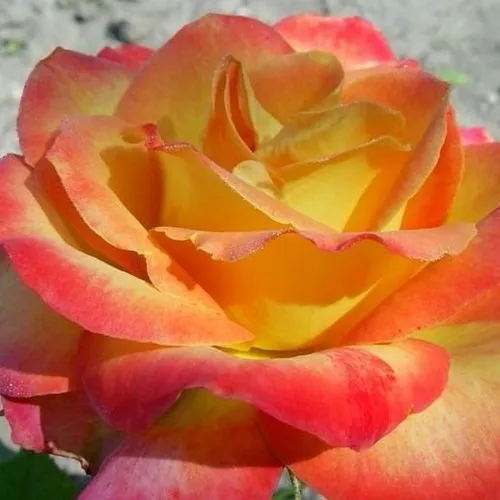
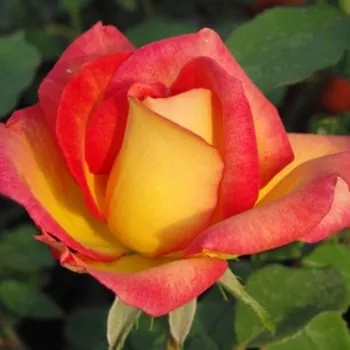
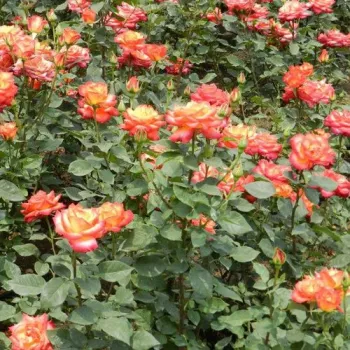
Sunshine - yellow base colour with vivid orange-red edging. - hybrid tea rose - mild, restrained-scented rose - soft, delicately floral character
– Striking yellow-red bicolour blooms with depth.
– Reliable remontant flowering through the season.
– Upright, medium bush with glossy dark foliage.
– Good heat and drought tolerance in summer.
– Award-winning variety, including AARS winner.
– Special feature: Colour shifts from fiery red and lemon-yellow buds to softer butter-yellow and salmon-pink tones as blooms mature.
Eco-conscious mindset – Dedicated owners
pharmaROSA® ORIGINAL 2-litre own-root potted rose
18,70 £
Unfortunately, we are currently unable to ship to the United Kingdom; we only deliver to countries within the European Union. For more information, please contact us!
5(7670)
ALINKA – yellow-red hybrid tea rose – Dickson
Sunshine petals and glowing borders make ALINKA a striking yet manageable presence in a family garden, with tidy clusters of double flowers backed by glossy dark foliage. This upright, medium-height shrub slips easily into small beds and classic front gardens, rewarding straightforward watering and feeding with dependable repeat flowering from summer into autumn. Its golden-yellow centres edged in orange-red or salmon tones sit comfortably among cottage-style perennials and ornamental grasses, giving you vibrant colour without demanding expert know-how. As an own-root rose it builds a strong framework for a long life in your garden, settling securely even where winds and showers regularly sweep through coastal plots. Over the seasons it matures steadily – roots in the first year, bushy shoots in the second, then full ornamental display by the third summer. With good winter hardiness and balanced disease tolerance, this reliable cultivar suits busy gardeners seeking enduring, low-fuss impact.
Freshly opened Alinka bloom with a bright lemon-yellow centre and narrow crimson petal margins.
Alinka shows double, cup-shaped blooms with a bright golden centre.
Usage options
Target area
Reasoning
Front garden feature rose
The upright habit and vibrant yellow-red blooms create a clear focal point at the front of the house without overpowering a modest plot. Plant as a single specimen by a path or doorway where its steady repeat flowering and neat shape offer easy kerb appeal for the time-pressed homeowner.
Small bed or mixed border
ALINKA’s compact spread fits comfortably into small borders alongside perennials, grasses, and low shrubs, giving structure without requiring complex pruning. Its own-root vigour helps it establish reliably, steadily building a durable framework and long-lived presence for the style-conscious beginner.
Classic cottage-style plantings
The bicolour flowers blend naturally with lupins, verbena, and airy grasses, echoing traditional cottage schemes in a manageable format. Group 3–5 plants for a loose, romantic effect that still stays tidy and easy to look after for the cottage-garden enthusiast.
Family garden borders with children and pets
Dense, glossy foliage and a medium height create a solid, bushy plant that anchors informal family borders. The plant responds well to basic care, remaining attractive over many seasons without intricate treatment, which suits the busy family-garden owner.
Cutting patch or cutting row
The hybrid tea heritage and long-stemmed, double blooms make ALINKA well suited for vases, bringing its sunshine tones indoors. A small row near the vegetable plot or at the border’s back can provide reliable stems through summer for the home florist.
Sunny, heat-exposed spots
With good heat tolerance and stable colour that only softens gently as the flowers age, ALINKA performs reliably in south-facing beds, provided it receives regular watering in prolonged dry spells. This resilience supports gardeners coping with hotter summers, especially the urban-plot keeper.
Coastal or wind-exposed gardens
The sturdy, upright framework and own-root anchoring help ALINKA settle securely in breezier, rain-washed sites where lighter plants struggle to stay upright, making it a reassuring choice for those tending weather-battered borders.
Large container or terrace pot (40–50 litres minimum)
Planted in a generous, well-drained container, ALINKA offers colour-rich, upright growth on patios or balconies where ground space is limited. Its manageable size and repeat flowering give dependable results with simple seasonal feeding for the small-space gardener.
Styling ideas
Cottage Glow – Combine ALINKA with pink lupins and white verbena in a small front border for a soft, romantic cottage look – ideal for lovers of traditional, flower-filled entrances.
Sunny Ribbon – Plant a loose row along a path, underplanted with low catmint or hardy geraniums, to create a neat, repeat-flowering edge – perfect for homeowners wanting tidy structure with little effort.
Golden Anchor – Use 3–5 plants in the centre of a mixed bed, with ornamental grasses such as Panicum ‘Sangria’ weaving through, to anchor the planting – suited to designers of relaxed but organised family gardens.
Terrace Accent – Grow a single bush in a 50‑litre container with trailing thyme or lobelia at the base for colour on patios or balconies – a good choice for urban gardeners working with limited space.
Cutting Corner – Dedicate a sunny spot with a short row of ALINKA, interplanted with annuals like cosmos, to harvest cheerful stems for the house – attractive to beginners experimenting with home-grown bouquets.
Technical cultivar profile
Parameter
Data
Name and registration
Hybrid tea / floribunda-type rose; registered as DICor, marketed as Alinka – yellow-red hybrid tea rose – DICor; ARS exhibition name ‘Red Gold’ for show and competitive display use.
Origin and breeding
Bred by Alexander Patrick Dickson in Northern Ireland from complex hybrid parentage including ‘Karl Herbst’, ‘Masquerade’, ‘Faust’ and ‘Piccadilly’; introduced commercially in 1967 across European and US markets.
Awards and recognition
Portland Gold Medal at Portland Rose Trials in 1969 and All‑America Rose Selections winner in 1971, later securing further show success including Humboldt Rose Society Floribunda first prize in 2001.
Growth and structural characteristics
Medium-height, upright shrub typically 85–115 cm tall and 65–95 cm wide, forming a well-leaved, moderately thorny framework with dense, glossy dark green foliage that holds the bi-coloured blooms attractively.
Flower morphology
Large, double, cup-shaped blooms with 26–39 petals, carried mainly in clusters; remontant flowering habit with a strong first flush and an abundant second wave, suitable for both borders and cutting for arrangements.
Colour data and phenology
Yellow-red bicolour (ARS yb); lemon-yellow centres with red margins opening from golden buds, softening through butter-yellow and orange-red to salmon-pink tones as blooms age, with generally good colour retention.
Fragrance and aroma
Fragrance is mild and restrained, with a soft, delicately floral character that adds refinement at close range without overpowering nearby seating areas, windows, or other more strongly scented garden plants.
Hip characteristics
Rose hips form sparsely due to the full double flowers; occasional small, ellipsoid hips about 10–14 mm across may develop, ripening to an orange-red colour and adding discreet late-season interest.
Resistance and winter hardiness
Hardy to approximately −26 to −23 °C (RHS H7, USDA 5b, Swedish Zone 4) with good heat tolerance; black spot resistance rated good, with medium susceptibility to powdery mildew and rust requiring occasional protection.
Horticultural recommendations
Best in full sun with fertile, well-drained soil; spacing from 50–90 cm depending on use, at 3.2–3.7 plants/m² for mass planting; avoid spring frost pockets, water in droughts, and prune flexibly to maintain shape and flowering.
ALINKA – yellow-red hybrid tea rose – Dickson offers reliable repeat flowering, a compact upright habit, and long-lived own-root resilience, making it a thoughtful choice for an easy-care yet distinctive garden feature.
Detailed product attributes
Product Identification Data
Product Name:
ALINKA – yellow-red hybrid tea rose - Dickson
Product Type:
pharmaROSA® ORIGINAL - 2-litre own-root potted rose
Competition and Show Awards:
Portland Gold Medal – Portland Rose Trials (1969); All‑America Rose Selections – winner (1971); Humboldt Rose Society Show – Floribunda 1st place (2001)
Closed Bud:
A golden-yellow base glints beneath a fiery red overlay.
Newly Opened Flower:
The centre is bright lemon yellow, with a narrow crimson band along the petal margins.
Full Bloom:
The centre is an intense golden yellow, the rims of the outer petals deepening to orange‑red.
Before Fading:
The yellow fades to a pale butter-yellow, and the red edge softens to salmon-pink.
Colour Fading Description:
The flower's colour moderately fades as it opens: the yellow softens to butter‑yellow, while the red margin mellows through orange‑red to salmon‑pink.
Pollinator Attraction:
The double (26–39 petal) flowers have reduced stamen accessibility and therefore attract pollinators poorly.
Pollinator-Friendly Rating:
Double (26–39 petals) flowers partially cover the stamens, therefore its pollinator-friendliness is limited; it is primarily an ornamental variety.
Hip Comment:
Rose hip formation is expected to be sparse due to the double flowers; occasionally 10–14 mm in diameter, ellipsoidal, orange‑red rose hips.
Our product is a rose grown with pharmaROSA®’s unique cultivation technology!
2-litre, own-root, potted rose.
With a shoot system appropriate to the season.
With a root system that thoroughly permeates the growing medium.
Quality compliant with the requirements of the E.N.A. (European Nurserystock Association).
Supplied in unique packaging that prevents damage.
Can be planted during frost-free periods.
True-to-variety rose bush with a unique identifier.
The pharmaROSA® own-root potted rose is a well-rooted plant that supports reliable establishment when planted and cared for properly, so it can be planted whenever the soil is not frozen.
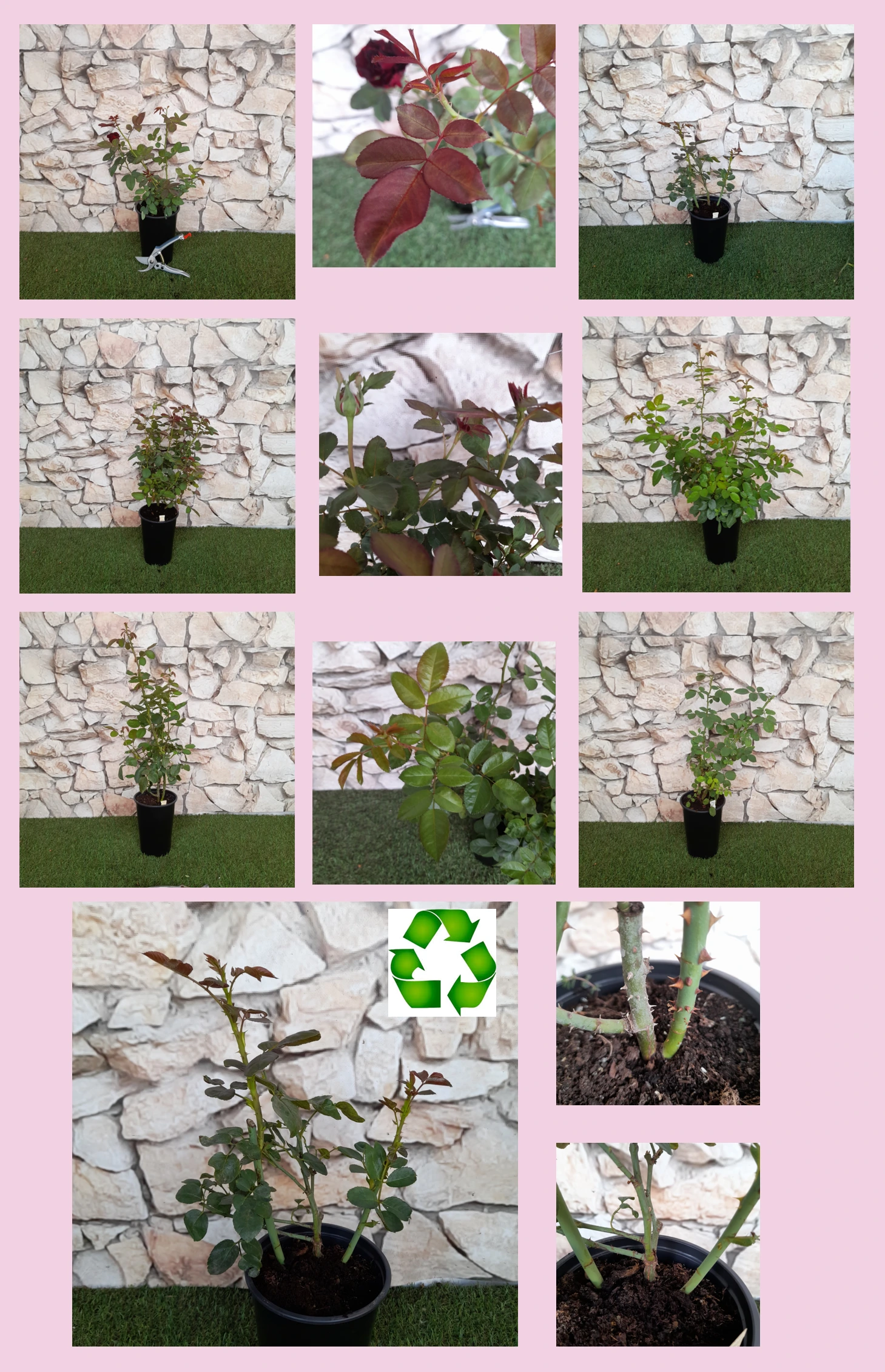
Crop overview: several varieties and growth stages in a short crop section.Shoot system: intensive growth of fresh basal shoots on a young plant.Root system: demonstration of a vigorous root system permeating the growing medium, by removing the pot.Balance: mature plant with root system and shoots in harmony with each other.
Information about the videos
The video series is not a “seasonal showcase”; it illustrates the essence of pharmaROSA® own-root cultivation in a tangible way: how the plant is built up, what the root system is like and how the shoot system regenerates. The recordings were therefore made at different times and with plants at various stages of development, so mixed foliage levels and differing stages of growth may appear in the videos. They are not a ‘sample’ of the batch dispatched, but a visual explanation of how the technology works. The current condition of the rose available to order — typical for the given period and similar to what you can expect to receive in the parcel — is shown in the upper part of the product page.
Pages for private customers Garden roses for the family garden, with minimal care → ORIGINAL® Premium garden roses – instant impact, a truly showpiece garden → EXTRA® Pages for professionals and private customers Roses for public spaces – large areas, sustainable maintenance → NATURAL® Roses for projects – hedge and row planting, fast implementation → RAPID® For professional partners only Production – propagation material for garden roses, wholesale → NEONATAL®
Company details
PharmaRosa Ltd. Company registration number: 01-09-717479 VAT number: 13075314-2-43 Plant health registration no.: HU130721 Bank account (IBAN): HU85117631891388688400000000 BIC (SWIFT): OTPVHUHB Bank name: OTP Bank Nyrt.