Climbing and rambling roses

90-093-1
90-093-2

Alexander MacKenzie

Climbing rose

- – Felicitas Svejda

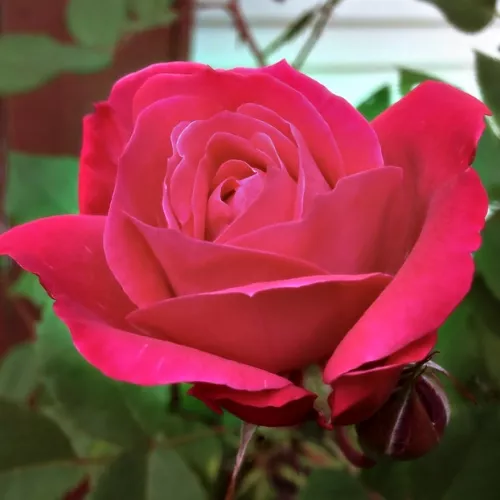
Uniform, intense raspberry-pink shade with a vivid scarlet overtone in the light. - climber, climbing rose - medium-strength, clearly scented rose - delicately fruity character

– Intense raspberry-pink blooms with depth
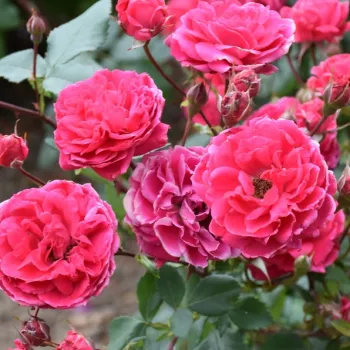
– Very double, globular clusters all season
– Tall, upright climber for walls and arches
– Extremely hardy, thrives in cold climates
– Medium, delicately fruity fragrance
Special feature: Occasionally forms decorative orange-red hips.
Neat composition – Future-proof garden concept
Alexander MacKenzie
pharmaROSA® ORIGINAL 2-litre own-root potted rose
22,90 £
Unfortunately, we are currently unable to ship to the United Kingdom; we only deliver to countries within the European Union. For more information, please contact us!
5 (6760)
facebook   twitter

ALEXANDER MACKENZIE – pink climbing rose – Svejda

Choose the Alexander MacKenzie climbing rose if you would like a classic raspberry-pink presence that quickly creates vertical structure around porches, fences or walls, giving an immediate sense of established character. This pharmaROSA® ORIGINAL own-root plant is already well rooted in its 2‑litre pot, so once you plant and water it regularly it settles in reliably, even where you need to improve drainage on heavier soils in a typical British family garden. In its first year it concentrates on building roots, in the second it extends its shoots, and from the third year it reveals its full ornamental impact. Clusters of fully double, globular blooms deliver a romantically full look with a medium, fruity fragrance, ideal for front gardens and cottage-style settings where you expect steady performance with straightforward, practical care.


Usage options

Target area Reasoning
Front garden climber on house wall or porch Best where you want a welcoming first impression: its upright habit and 1.8–3 m height quickly dress brick or render with classic raspberry-pink clusters, while its own-root form establishes steadily over years with simple pruning – ideal for the busy homeowner.
Rose arch or pergola near seating area The medium, fruity scent and very double, globular flowers work particularly well over an arch or pergola, creating a richly petalled overhead canopy that feels lush at eye and nose level, turning an ordinary path or bench into a more intimate retreat for the relaxed gardener.
Informal cottage-style mixed border backdrop Placed at the back of a border, its tall, upright canes and dense, mid‑green foliage form a leafy wall, with clusters of raspberry-pink blooms weaving among perennials; own‑root growth means it thickens from the base and keeps the border feeling full for the long‑term planner.
Loose flowering screen or informal hedge At 140 cm spacing it forms a soft, flowered line that breaks up views without feeling heavy, combining glossy foliage with regular flushes of colour; over time the framework of canes matures into a reliable, living screen appreciated by the space‑conscious neighbour.
Statement specimen by entrance or gate Used singly at about 220 cm from other shrubs, it becomes a focal point, its rich pink to raspberry flowers catching the eye against mid‑green leaves; own‑root resilience supports long‑lived structure, rewarding the design‑minded yet time‑pressed beginner.
Large container on terrace or small patio In a 40–50 litre or larger planter with a sturdy support, it offers vertical interest where border space is limited; careful watering and feeding keep the clusters coming, giving town and courtyard spaces a classic rose presence prized by the urban gardener.
Climbing rose for colder or exposed positions With hardiness down to around –35 °C and robust Canadian breeding, it shrugs off typical UK winters and copes well with cooler, breezier spots, providing reassuring continuity of framework and flower for the climate‑aware buyer.
Trained along fences in parks or shared gardens Along a sunny fence it offers a long, colourful band of bloom; although regular health care is needed, its remontant habit and abundant second flush keep public or shared spaces looking tended and welcoming through summer for the appearance‑focused resident.

Styling ideas

  • Cottage-arch romance – Train it over a simple metal or wooden arch with foxgloves and hardy geraniums at the base for a soft, time‑honoured cottage feel – for lovers of informal, storybook entrances.
  • Front-fence welcome – Run it along a low timber or wire fence with Campanula and Japanese spurge below to knit the boundary into a coherent, green‑and‑pink frontage – for homeowners keen on tidy kerb appeal.
  • Patio-showpiece climber – Grow it in a 50‑litre tub with a sturdy obelisk, underplanting with trailing lobelia or ivy to dress a small terrace – for balcony and courtyard gardeners wanting height without losing floor space.
  • Raspberry-rose backdrop – Use it behind pale delphiniums, lilies and ornamental grasses so raspberry‑pink clusters pop against cooler tones – for detail‑oriented gardeners planning layered, photograph‑worthy borders.
  • Entrance-column accent – Spiral it around a wooden post or porch support with Liriope at the base to frame a doorway elegantly – for those refining a classic, formal‑meets‑cottage front entrance.

Technical cultivar profile
Parameter Data
Name and registration Alexander MacKenzie is a climbing shrub rose marketed as ALEXANDER MACKENZIE – pink climbing rose – Svejda; exhibition name A. Mackenzie, within the Climbing rose commercial group.
Origin and breeding Bred by Felicitas Svejda at Agriculture and Agri‑Food Canada, Ottawa, from ‘Queen Elizabeth’ × (‘Red Dawn’ × ‘Suzanne’); introduced and registered in 1985 as a hardy ornamental climber.
Growth and structural characteristics Strong, upright climber reaching about 1.8–3 m high and 1.5–2.5 m wide, with dense, glossy mid‑green foliage, moderately spiny stems and weak self‑cleaning so spent blooms often need removal.
Flower morphology Clusters of medium‑sized, very double, globular to pompon flowers, usually over 40 petals, borne in trusses; remontant with abundant second flushes through the season in suitable conditions.
Colour data and phenology Uniform intense raspberry‑pink with scarlet overtones; buds dark carmine‑crimson, lightening in strong sun to pink, with cooler purplish tones in shade; colour retention moderate before a softer fade.
Fragrance and aroma Clearly perceptible, medium‑strength fragrance with a delicately fruity character; primarily ornamental rather than for cutting or perfume production, but adds sensory interest near paths and seating.
Hip characteristics Occasionally forms ovoid orange‑red hips about 15–25 mm in diameter; hips add a modest seasonal accent if spent flowers are not removed and conditions for fruiting are favourable.
Resistance and winter hardiness Extremely winter hardy to around –37 to –34 °C (RHS H7, Swedish zone 6, USDA 3b); disease resistance is low, with very susceptible reactions to powdery mildew, black spot and rust.
Horticultural recommendations Best in sunny, well‑drained sites with fertile soil; plant 140 cm apart for borders or hedging, 220 cm as a specimen; requires regular watering, feeding and protective plant‑health management.

ALEXANDER MACKENZIE offers richly coloured, fragrant clusters on a hardy, long‑lived own‑root climber that matures into a reliable vertical feature; consider it where you can give regular care and wish for enduring structure.

Detailed product attributes

Product Identification Data

Product Name: ALEXANDER MACKENZIE – pink climbing rose - Svejda
Product Type: pharmaROSA® ORIGINAL - 2-litre own-root potted rose
Cultivar Authenticity: Verified:18.06.2025
Cultivar Quality Rating: premium silver
Item Number: [1443] 90-093 (14.02.2026) pharmarosa.co.uk

Name and Registration

Meaning of Cultivar Name: The name honours Sir Alexander Mackenzie, a Scottish–Canadian explorer who was the first to reach the Pacific Ocean by crossing the North American continent.
Cultivar Synonym: A. Mackenzie
Original Trade Name: Alexander MacKenzie
Current Trade Name: Alexander MacKenzie Climbing rose Svejda
Rose Group: Climber, Shrub
Commercial Type: climber, climbing rose
Commercial Group: Climbing rose
Exhibition Category: shrub rose
Collection: Climbing rose

Origin and Breeding

Initial Distributor: Agriculture and Agri -Food Canada (Canada)
Breeder: Felicitas Svejda
Breeding Company / Institution: Agriculture and Agri-Food Canada, Central Experimental Farm (Ottawa)
Breeding Year: -, 1985
Parentage: ‘Queen Elizabeth’ × (‘Red Dawn’ × ‘Suzanne’)

Growth and Structural Characteristics

Height: 5.9-9.8ft (180-300 cm)
Spread: 4.9-8.2ft (150-250 cm)
Growth Habit: upright
Foliage: The variety has dense foliage. Its leaves have a glossy surface and a mid-green shade.


Prickliness: moderately spiny
Self-Cleaning Description: The majority of spent flowers remain on the plant and require subsequent cleaning.
Self-Cleaning Intensity: Self-cleaning: weak

Flower Morphology

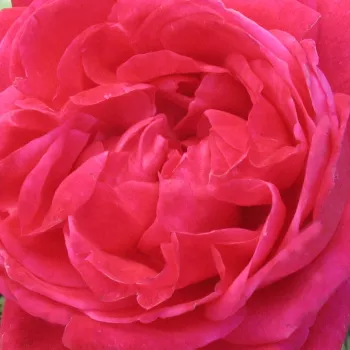
Flower Fullness: very double-flowered
Flower Shape: globular, pompon
Flower Size: M (1,5-2,75 in)
Inflorescence Type: cluster-flowered
Colour Code: ARS code: RB RHS code: 53A (outer), 46B (inner)
Repeat Flowering: Remontant and produces an abundant second flowering.

Colour Data and Phenology

Colour: pink
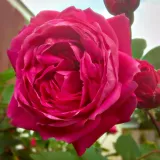
Flower Colour Description: Uniform, intense raspberry-pink shade with a vivid scarlet overtone in the light.
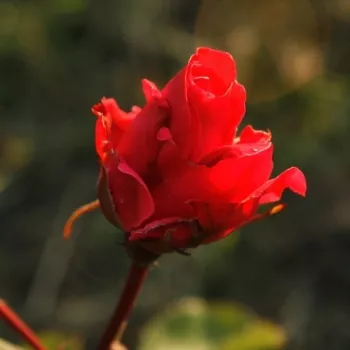
Closed Bud: Dark carmine–crimson, velvety texture, with a deeper tone at the edge.
Newly Opened Flower: Rich fuchsia–raspberry-pink centre, with a fuller inner tone and a slightly darkening carmine outer rim.
Full Bloom: Uniform mid-deep raspberry pink, the outer petal whorl is in places more burgundy, with a cool purplish tone in shade.
Before Fading: The crimson shade softens and lightens, fading to a raspberry-pink with a fine powdery bloom.
Colour Fading Description: In strong sunlight the deep red shade may lighten to pink.

Fragrance and Aroma

Fragrance Strength: medium-strength, clearly scented rose
Fragrance Character: delicately fruity character
Pollinator Attraction: Double (26–39‑petalled) flowers have limited appeal to pollinators because the full flower form restricts stamen accessibility, reducing their attractiveness.
Pollinator-Friendly Rating: Double (26–39 petals) flowers partially cover the stamens, so its pollinator-friendliness is limited and it is primarily an ornamental variety.

Hip Characteristics

Hip Shape: ovoid
Hip Colour: orange-red
Hip Comment: Occasionally produced, 15–25 mm in diameter, ovoid, orange-red rose hip.

Resistance and Hardiness

Hardiness (°C): -37–-34 °C
Heat and Drought Tolerance Description: Tolerates heat well; requires watering during prolonged dry spells.
Disease Resistance: very susceptible
  • powdery mildew – very susceptible
  • black spot – very susceptible
  • rust – very susceptible

Horticultural Recommendations

Recommended Planting Distance: 140 cm for mass planting, 140 cm for hedging, 220 cm as a specimen
Planting Density: in square planting 0,5 plants/m², in hexagonal arrangement 0,6 plants/m²
Partial Shade Tolerance: Preferably for sunny locations
Maintenance Requirement: High; low disease resistance, regular plant protection required.
Primary Uses: park, specimen, hedging, climbing, urban green space, border

Comments

Strengths: Neat composition – Future-proof garden concept
Companion Plants: Campanula portenschlagiana - Dalmatian bellflower Liriope muscari - lilyturf Pachysandra terminalis - Japanese spurge
Comment: -
ALEXANDER MACKENZIE – pink climbing rose - Svejda
Uniform, intense raspberry-pink shade with a vivid scarlet overtone in the light. - climber, climbing rose - medium-strength, clearly scented rose - delicately fruity character
The rose webshop. - pink - climber, climbing rose - Alexander MacKenzie - (5.9-9.8ft (180-300 cm))
Inflorescence: cluster-flowered Height: 5.9-9.8ft (180-300 cm) Flower shape: globular, pompon Winter hardiness: 4b pink - Agriculture and Agri -Food Canada (Canada) climber, climbing rose - Flower size: !- Flower size: !- - Height: 5.9-9.8ft (180-300 cm) Height: 5.9-9.8ft (180-300 cm) - Flower fullness: very double-flowered Alexander MacKenzie - Roses in the garden | pharmaROSA® Original - premium silver Felicitas Svejda

We showcase the external appearance of the roses available for online purchase from our webshop.


Which product type is right for you?


Information

In what condition do we dispatch the rose from our online webshop?

Let us ask ourselves the question: What would I like to use the rose for?
Flower? – Location? – Screening? – Fragrance? – Height? – Breeder? – Rose hip?

Rose purchasing information
Methods of payment – Delivery charges – Delivery – Complaints handling

Care guide

Our product is a rose grown with pharmaROSA®’s unique cultivation technology!

2-litre, own-root, potted rose.
With a shoot system appropriate to the season.
With a root system that thoroughly permeates the growing medium.
Quality compliant with the requirements of the E.N.A. (European Nurserystock Association).
Supplied in unique packaging that prevents damage.
Can be planted during frost-free periods.
True-to-variety rose bush with a unique identifier.

The pharmaROSA® own-root potted rose is a well-rooted plant that supports reliable establishment when planted and cared for properly, so it can be planted whenever the soil is not frozen.


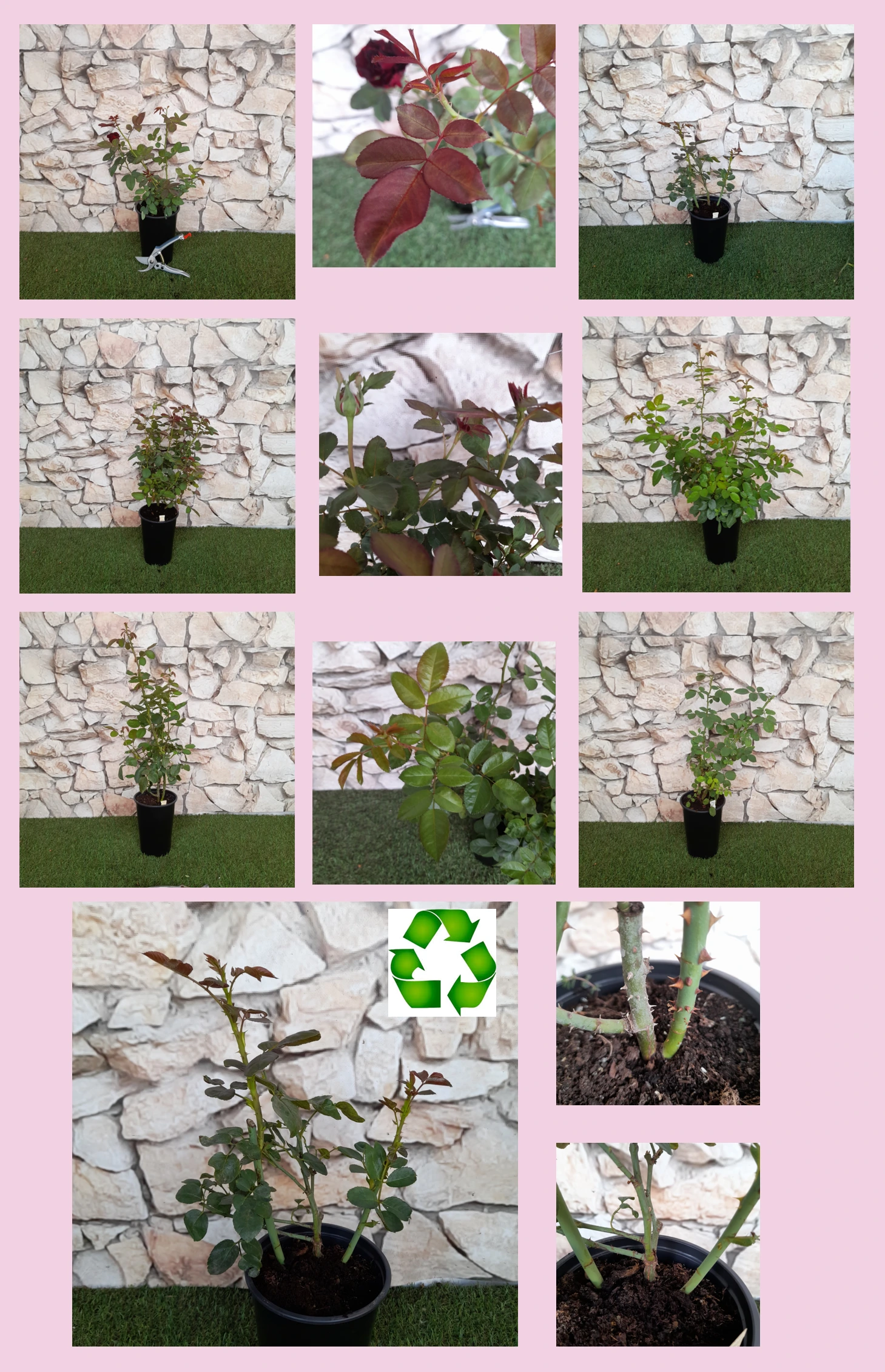
Crop overview: several varieties and growth stages in a short crop section.
Shoot system: intensive growth of fresh basal shoots on a young plant.
Root system: demonstration of a vigorous root system permeating the growing medium, by removing the pot.
Balance: mature plant with root system and shoots in harmony with each other.

Information about the videos
The video series is not a “seasonal showcase”; it illustrates the essence of pharmaROSA® own-root cultivation in a tangible way: how the plant is built up, what the root system is like and how the shoot system regenerates. The recordings were therefore made at different times and with plants at various stages of development, so mixed foliage levels and differing stages of growth may appear in the videos. They are not a ‘sample’ of the batch dispatched, but a visual explanation of how the technology works. The current condition of the rose available to order — typical for the given period and similar to what you can expect to receive in the parcel — is shown in the upper part of the product page.

pharmarosa.atpharmarosa.compharmarosa.depharmarosa.ropharmarosa.sipharmarosa.skpharmarosa.hrpharmarosa.itpharmarosa.frpharmarosa.grpharmarosa.bepharmarosa.dkpharmarosa.nlpharmarosa.iepharmarosa.plpharmarosa.lupharmarosa.ptpharmarosa.espharmarosa.bgpharmarosa.ltpharmarosa.sepharmarosa.lvpharmarosa.eepharmarosa.fipharmarosa.rudarinarose.co.ukpharmarosa.cz

Product types

Pages for private customers
Garden roses for the family garden, with minimal care  → ORIGINAL®
Premium garden roses – instant impact, a truly showpiece garden  → EXTRA®
Pages for professionals and private customers
Roses for public spaces – large areas, sustainable maintenance  → NATURAL®
Roses for projects – hedge and row planting, fast implementation  → RAPID®
For professional partners only
Production – propagation material for garden roses, wholesale  → NEONATAL®

Company details

PharmaRosa Ltd.
Company registration number: 01-09-717479
VAT number: 13075314-2-43
Plant health registration no.: HU130721
Bank account (IBAN):
HU85117631891388688400000000
BIC (SWIFT): OTPVHUHB
Bank name: OTP Bank Nyrt.