Alexander™ hybrid tea rose – HARlex
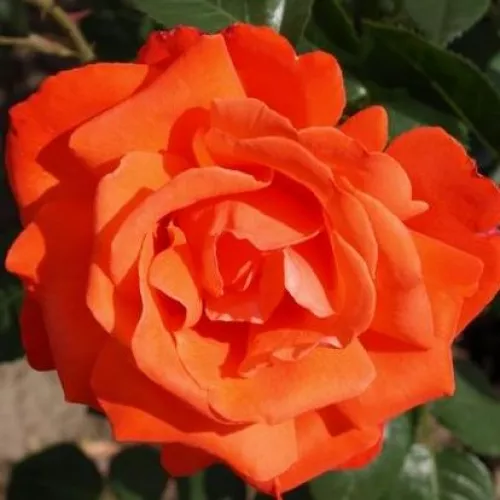
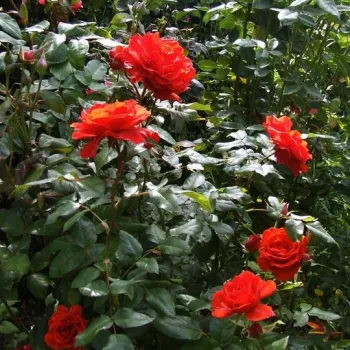
This classic hybrid tea brings confident colour and upright structure to small and medium gardens, combining award-winning reliability with moderate, manageable maintenance. Its vivid orange-red blooms stand out even in typical British light, while the own-root habit supports long-term garden stability and graceful regeneration after pruning. In heavier soils it appreciates thoughtfully improved drainage, rewarding you with season-long flower display on a balanced, medium-dense shrub. Plant, water, mulch and let it settle – with roots establishing in the first year, top growth building in the second, and full ornamental value unfolding by the third, ideal for time-conscious beginners.
Usage options
| Target area |
Reasoning |
| Front garden focal point |
Use as a single specimen by the path or beside the front door where its upright habit and vivid orange-red flowers give structure without overwhelming a small space. Own-root vigour supports a long-lived planting that matures steadily, suiting cautious beginners. |
| Small bed or border group |
Plant 3–5 together at the recommended spacing to create a compact, formal-looking block of repeat flowers that frames low windows or lawn edges. The balanced growth habit keeps the group tidy, helping busy owners maintain a neat frontage with minimal effort for families. |
| Cottage-style mixed border |
Combine with airy perennials such as lobelia, obedient plant and crocosmia so the bright blooms punctuate softer textures. Moderate foliage density allows companions to weave through, while good colour retention keeps the display harmonious across the season for cottage-garden enthusiasts. |
| Cutting patch in a family garden |
Grow a short row or block for cutting; the high-centred, double flowers and strong stems suit vases, allowing you to bring the orange-red tones indoors. Repeat flowering means regular harvests in summer without complex pruning routines, ideal for home-arranger gardeners. |
| Low informal hedge or line |
At around 60–70 cm spacing the upright shrubs read as a loose hedge along drives or boundaries. Consistent height and colour create a unified look, while own-root endurance helps maintain the line for years with straightforward annual pruning, pleasing long-term planners. |
| Partially shaded side garden |
Suited to side paths or east-facing strips where it receives morning or filtered sun, it tolerates partial shade while still producing well-coloured blooms. This flexibility simplifies planting plans around typical British homes, supporting space-conscious owners. |
| Large container near seating |
In a 40–50 litre or larger pot with quality compost, its upright framework and mild fragrance decorate patios or roof terraces. Regular watering and feeding keep the plant productive, while own-root resilience supports recovery if conditions fluctuate, reassuring balcony and terrace users. |
| Coastal or wind-exposed garden |
Its sturdy, upright framework and medium-dense foliage cope well where breezes are frequent, provided the planting area offers slightly improved drainage in heavier soils to avoid waterlogging. This combination suits practical, weather-aware front-garden owners. |
Styling ideas
- Classic entrance pair – Flank a front path or porch with two Alexander™ for a formal, repeated accent of orange-red bloom – for homeowners wanting a smart but simple welcome.
- Cottage ribbon – Thread Alexander™ through a border with lobelia and obedient plant so its bold flowers rise above softer pastels – for those favouring relaxed, traditional cottage schemes.
- Family cutting row – Line a sunny fence with a short run of plants to provide reliable stems for indoor vases all summer – for households who enjoy picking their own flowers.
- Patio statement tub – Plant a single rose in a 50 litre terracotta container underplanted with trailing lobelia – for balcony and terrace gardeners wanting impact from one easy-care feature.
- Warm-toned hedge – Arrange a loose hedge along a drive, interspersed with crocosmia for repeating orange accents – for drivers and visitors who appreciate a coordinated, long-season display.
Technical cultivar profile
| Parameter |
Data |
| Name and registration |
Alexander™ Hybrid tea rose HARlex, hybrid tea shrub rose; ARS exhibition name Alexander; collection hybrid tea rose; commercial type hybrid tea rose for garden and cutting use. |
| Origin and breeding |
Bred by Jack L. Harkness, R. Harkness Roses & Co. Ltd., United Kingdom; parentage ‘Tropicana’ × (‘Ann Elizabeth’ × ‘Allgold’); bred, registered and introduced in 1972. |
| Awards and recognition |
RNRS Certificate of Merit 1972; ADR classification 1974; Hamburg Gold Medal 1973; Belfast Gold Medal 1974; Best Hybrid Tea 1974; New Zealand Certificate of Merit 1974; RHS/RNRS Award of Garden Merit 1993. |
| Growth and structural characteristics |
Strong, upright shrub 145–195 cm high and 85–115 cm wide, with moderately dense light green foliage and dense prickling; balanced growth, best with annual pruning and regular feeding. |
| Flower morphology |
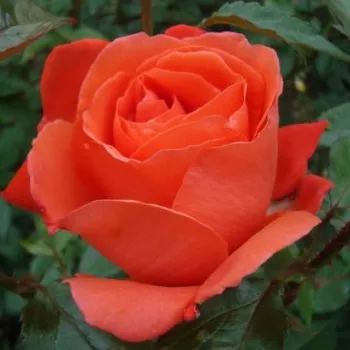
Medium-sized, double (26–39 petals), cupped, medium high-centred flowers on mainly solitary stems; remontant with a very good second flush, suitable for cutting and exhibition-style use. |
| Colour data and phenology |
Vivid orange-red (RHS 34A–34B) with subtle vermilion tones; buds deep orange-red, colour holds well and fades slowly to a softer salmon-orange pastel towards the end of each bloom’s life. |
| Fragrance and aroma |
Mild, delicately scented rose fragrance of soft character; noticeable at close range around seating or cutting areas, not overpowering, complements the strong visual impact of the flower colour. |
| Hip characteristics |
Rose hip set generally limited due to double flowers; occasional ovoid, egg-shaped orange-red hips 12–18 mm across may form late in the season if spent blooms are not removed. |
| Resistance and winter hardiness |
Hardy to about -21 to -18 °C (RHS H7, USDA 6b, Swedish Zone 3); resistant to powdery mildew and black spot, moderate rust sensitivity; moderate heat and drought tolerance with regular watering. |
| Horticultural recommendations |
Suited to beds, borders, hedging and cutting; plant 60–110 cm apart depending on use; prefers fertile, well-drained soil, full sun to light shade; deadhead to encourage repeats, mulch yearly. |
Alexander™ Hybrid tea rose HARlex offers vivid, long-lasting colour, reliable repeat flowering and a durable own-root framework that settles in for years; an excellent choice if you seek an easy yet distinguished garden feature.