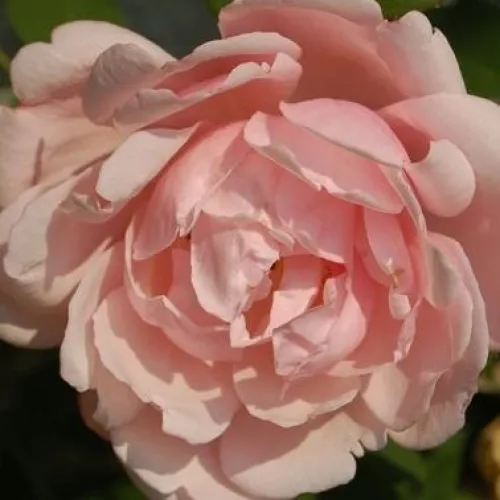
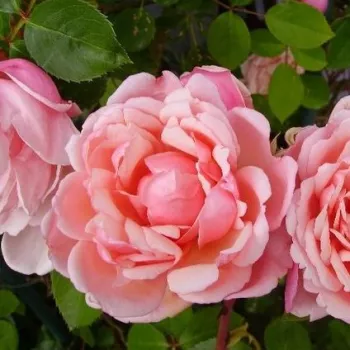
Mid-toned salmon pink with a slight copper tinge at the base of the petals. - historic - rambler, climbing - creeping rose - strong, far-scented rose - sweet, fruity aroma
– Strong, far-reaching sweet fruity fragrance
– Abundant salmon-pink clusters in main flush
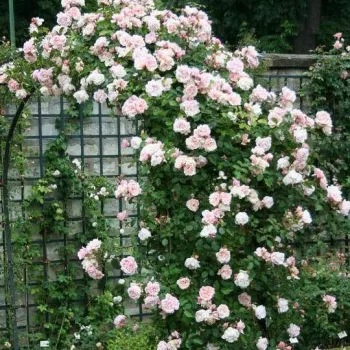
– Vigorous climber for pergolas and walls
– Glossy dark foliage with historic charm
– Good heat and moderate drought tolerance
– Special feature: RHS Award of Garden Merit climber from 1921, a classic Barbier rambler.
Natural plant form – Living, vibrant garden
pharmaROSA® ORIGINAL 2-litre own-root potted rose
17,90 £
Unfortunately, we are currently unable to ship to the United Kingdom; we only deliver to countries within the European Union. For more information, please contact us!
5(9139)
ALBERTINE – salmon-pink historic rambler-climbing rose - Barbier
Historic charm meets easy-going vitality in ‘Albertine’, a classic Barbier rambler that clothes walls, fences and pergolas in clouds of salmon-pink, strongly scented clusters. This own-root plant settles in steadily and is ideal where you prefer simple care with only moderate plant protection. Over time it forms a dense, dark green curtain of foliage and bloom that copes well with summer warmth and typical British showers and breezes, provided soil drainage is sensibly managed. Its reliable spring flush, followed by lighter repeats, brings a romantic, cottage-style presence to everyday family gardens without demanding expert pruning. In most gardens you can expect roots to establish in the first year, strong new shoots in the second, and full ornamental value by the third, creating a long-lived, characterful feature. Choose it when you want established character, generous coverage, memorable fragrance, adaptable placement, reliable structure, enduring colour and reassuring longevity.
Albertine in potted sales condition, showing the historic rambler’s salmon-pink blooms and climbing habit.
Close-up of Albertine’s densely thorny stems.
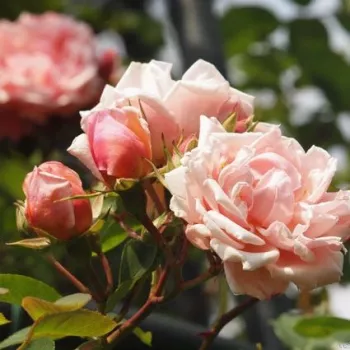
Albertine showing buds, opening blooms and fading salmon-pink flowers side by side.
Albertine shows double, cup-shaped flowers with 26–39 petals.
Usage options
Target area
Reasoning
Pergola or arbour over a seating area
The long, flexible canes and dense foliage allow you to train ‘Albertine’ up and over pergolas or arbours, creating a shaded tunnel of salmon-pink flowers and strong, sweet fragrance in early summer, then lighter repeats. Own-root growth builds a permanent framework that regenerates from the base, so even after harder pruning it fills back in, ideal for a long-term, romantic retreat for the relaxed home gardener user
House wall or sunny garage wall
With its 3,5–6 m height and glossy dark leaves, this climber can be fanned out along trellis or wires on a warm house or garage wall, where heat and reflected light encourage plentiful flowering. It tolerates partial shade, so it also performs on aspects that lose some sun during the day, provided there is good airflow and regular tying-in. Own-root plants anchor securely and age gracefully, suiting owners who want a stable, maturing façade feature householder
Family garden boundary fence
Trained along a standard garden fence, ‘Albertine’ offers generous coverage with medium self-cleaning blooms that largely drop their petals themselves, reducing deadheading. Its medium disease resistance, with good tolerance to black spot and powdery mildew, keeps foliage reasonably presentable in typical suburban conditions. Over the years, the strong root system supports a thick green screen and seasonal colour for those seeking privacy with minimal technical know-how neighbours
Cottage-style mixed border backdrop
Placed at the back of a cottage border, this historic rambler provides a vertical accent of salmon-pink, copper-tinged flowers above perennials such as yarrow, echinacea or airy grasses. Its clustered, double blooms and rambling habit combine well with informal planting, adding vintage atmosphere without strict training. Own-root growth ensures that if stems are ever cut back, new shoots return from ground level, preserving the established look for intuitive, informal gardeners cottage-owners
Arched entrance or garden gateway
The long canes can be curved over an arch or simple metal frame to frame a path or entrance, where the strong, far-scented perfume is fully appreciated. Its medium maintenance level means an annual tidy and occasional tying-in are usually enough to maintain a graceful outline. The reliable main flush and softer reflowering give an evolving display each season, perfect for those wanting a welcoming, gently managed focal point visitors
Free-standing specimen on a large obelisk
In a generous border or lawn, ‘Albertine’ can be grown as a specimen on a tall obelisk, where its vigorous, climbing habit forms a column of dark foliage and pastel salmon blooms. The good heat and moderate drought tolerance are useful in more exposed or sunny positions, as long as deep watering is provided in very dry spells. Over time, the own-root base thickens into a reliable structure, suiting gardeners who value a single, sculptural rose with character collectors
Large container on terrace or patio (minimum 50 litres)
Where soil conditions are poor or space is tight, this rose can be grown in a substantial container of at least 50 litres, with a sturdy support or trellis. The contained root zone allows easy control of moisture and feeding, helping to balance its vigour in a smaller setting and making seasonal care straightforward. Being on its own roots, it adjusts steadily to pot life while still offering height, colour and scent for design-conscious but time-limited patio gardeners urbanites
Park-style or large informal planting
In larger plots, along park-style paths or big property boundaries, ‘Albertine’ works well in loose groups or long stretches, where its natural, slightly untamed habit becomes an asset. It copes with typical British wind and rain when given decent drainage and a simple support line, creating a flowing, living curtain of bloom and foliage. Once established, the extensive own-root system underpins many years of service with only periodic pruning, suited to spacious, low-intervention landscapes estate-owners
Styling ideas
Cottage Archway – train ‘Albertine’ over a simple wooden arch with underplanting of Achillea and soft grasses to create a rosy, scented entrance – ideal for lovers of relaxed cottage gardens
Front-Garden Screen – run it along a front fence with clipped Ilex crenata balls in front, combining romantic flowers with neat structure – suited to homeowners wanting privacy with classic charm
Pergola Retreat – cover a seating pergola and pair with pale clematis or white foxgloves for layered height and perfume – perfect for those who enjoy evening relaxation outdoors
Historic Feature Wall – fan the rose across an old brick wall, adding antique terracotta pots and herbs at the base – for admirers of traditional, period-style British gardens
Statement Obelisk – grow ‘Albertine’ on a tall metal obelisk in a lawn, ringed by Echinacea ‘Delicious Nougat’ for contrast – appealing to design-conscious gardeners seeking a focal point
Technical cultivar profile
Parameter
Data
Name and registration
Historic rambler-climbing rose marketed as ALBERTINE – salmon-pink historic rambler-climbing rose - Barbier; ARS exhibition name ‘Albertine’; unregistered cultivar within the historical rose group.
Origin and breeding
Bred by René Barbier, Barbier Frères & Cie in France from Rosa wichurana × ‘Mrs. Arthur Robert Waddell’; introduced by Barbier Frères & Cie in 1921 as a vigorous, large-flowered rambler.
Awards and recognition
Recognised with the Royal National Rose Society / RHS Award of Garden Merit in 1993, confirming dependable garden performance, ornamental value and suitability for typical UK garden conditions.
Growth and structural characteristics
Strong, climbing rambler reaching about 3,5–6 m high with a 3–5,2 m spread; forms dense, glossy dark green foliage on well-armed canes, creating substantial coverage for supports and structures.
Flower morphology
Clusters of small, double, cup-shaped blooms, around 0,5–1,5 inches across, with 26–39 petals; main early-summer flush followed by lighter repeat flowering; spent petals generally fall naturally.
Colour data and phenology
Mid-toned salmon-pink with copper tints; buds deep copper-red, opening to bright copper-pink then soft salmon, paling to pastel pink with creamy petal edges; colour deepens slightly in cooler conditions.
Fragrance and aroma
Strong, far-reaching perfume with a sweet, fruity character; the scent is most noticeable around the main flowering period and is particularly effective when plants are trained near paths or seating.
Hip characteristics
Limited rosehip production; when present, ovoid orange-red hips about 8–12 mm across, providing a modest autumn accent without significant self-seeding or ornamental clutter.
Resistance and winter hardiness
Hardy to approximately -26 to -23 °C (RHS H7, USDA 5b, Swedish zone 4); good tolerance of heat and moderate drought; resistant to black spot and powdery mildew, moderate susceptibility to rust.
Horticultural recommendations
Best on pergolas, arbours, walls, fences and park plantings; spacing 2,4–4,4 m depending on use; tolerates partial shade; requires medium maintenance with occasional plant protection and structural pruning.
ALBERTINE offers generous coverage, strong fragrance and adaptable placement on an own-root framework that matures reliably over the years, making it a thoughtful choice for those planning a long-lived, characterful garden feature.
Detailed product attributes
Product Identification Data
Product Name:
ALBERTINE – salmon-pink historic rambler-climbing rose - Barbier
Product Type:
pharmaROSA® ORIGINAL - 2-litre own-root potted rose
Pollinator Attraction:
Double (26–39 petals) flowers with concealed stamens are poor at attracting pollinators.
Pollinator-Friendly Rating:
Double, 26–39-petalled flowers partially conceal the stamens and attract pollinators poorly, therefore its pollinator-friendliness is limited and it is mainly ornamental.
Our product is a rose grown with pharmaROSA®’s unique cultivation technology!
2-litre, own-root, potted rose.
With a shoot system appropriate to the season.
With a root system that thoroughly permeates the growing medium.
Quality compliant with the requirements of the E.N.A. (European Nurserystock Association).
Supplied in unique packaging that prevents damage.
Can be planted during frost-free periods.
True-to-variety rose bush with a unique identifier.
The pharmaROSA® own-root potted rose is a well-rooted plant that supports reliable establishment when planted and cared for properly, so it can be planted whenever the soil is not frozen.
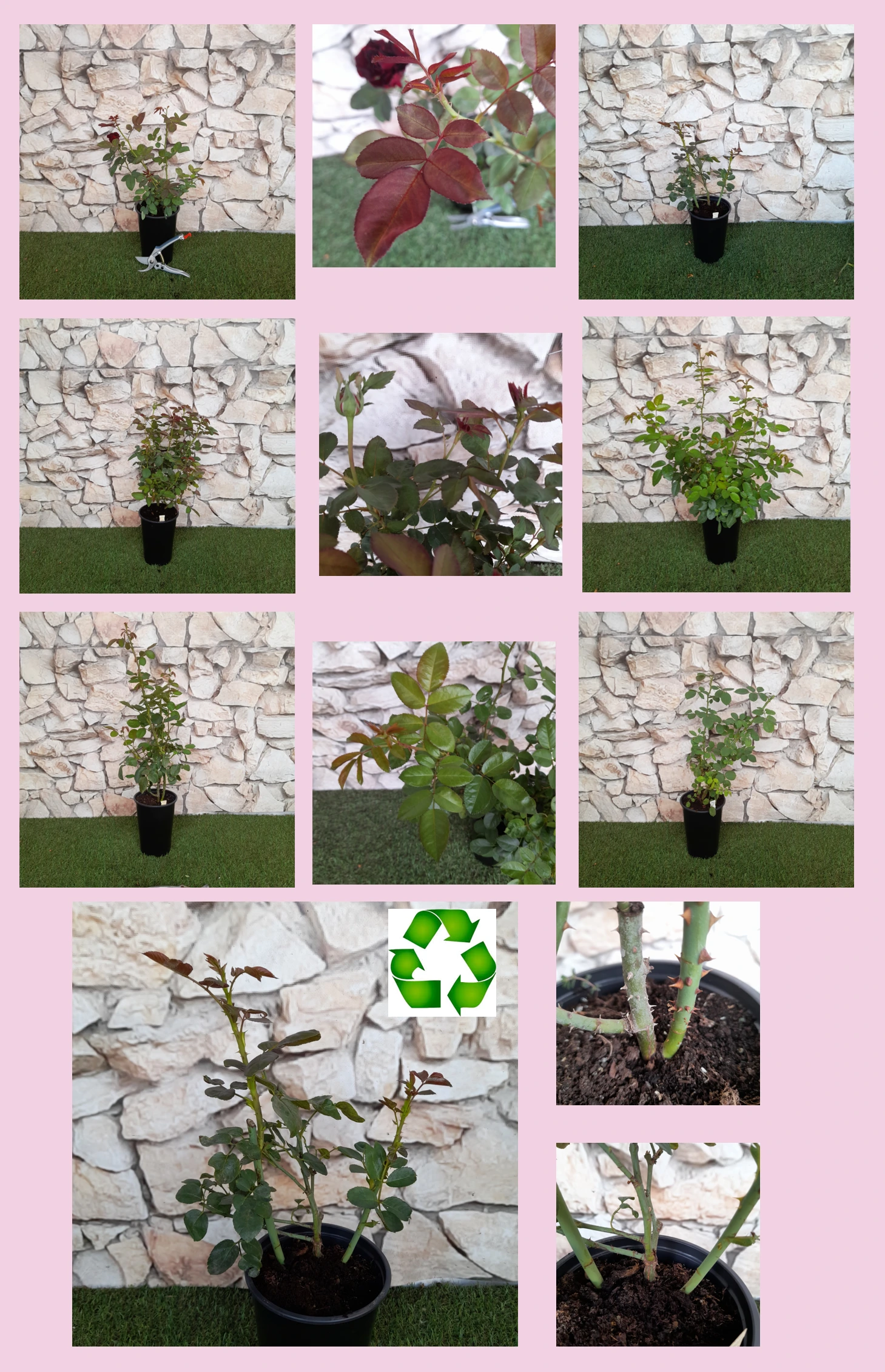
Crop overview: several varieties and growth stages in a short crop section.Shoot system: intensive growth of fresh basal shoots on a young plant.Root system: demonstration of a vigorous root system permeating the growing medium, by removing the pot.Balance: mature plant with root system and shoots in harmony with each other.
Information about the videos
The video series is not a “seasonal showcase”; it illustrates the essence of pharmaROSA® own-root cultivation in a tangible way: how the plant is built up, what the root system is like and how the shoot system regenerates. The recordings were therefore made at different times and with plants at various stages of development, so mixed foliage levels and differing stages of growth may appear in the videos. They are not a ‘sample’ of the batch dispatched, but a visual explanation of how the technology works. The current condition of the rose available to order — typical for the given period and similar to what you can expect to receive in the parcel — is shown in the upper part of the product page.
Pages for private customers Garden roses for the family garden, with minimal care → ORIGINAL® Premium garden roses – instant impact, a truly showpiece garden → EXTRA® Pages for professionals and private customers Roses for public spaces – large areas, sustainable maintenance → NATURAL® Roses for projects – hedge and row planting, fast implementation → RAPID® For professional partners only Production – propagation material for garden roses, wholesale → NEONATAL®
Company details
PharmaRosa Ltd. Company registration number: 01-09-717479 VAT number: 13075314-2-43 Plant health registration no.: HU130721 Bank account (IBAN): HU85117631891388688400000000 BIC (SWIFT): OTPVHUHB Bank name: OTP Bank Nyrt.