Uniform, pure mid-pink shade with a slight salmon-pink tone. The petals have a silky sheen. - floribunda bedding rose - mild, restrained-scented rose - delicate, light character
– Abundant clusters of mid-pink rosette blooms
– Reliable remontant flowering through the season
– Bushy, compact habit for beds and hedges
– Good heat and moderate drought tolerance
– Award-winning floribunda with multiple gold medals
– Special feature: Mild, delicately scented flowers ideal for close seating areas.
Origin guarantee – Biodiversity
pharmaROSA® ORIGINAL 2-litre own-root potted rose
18,70 £
Unfortunately, we are currently unable to ship to the United Kingdom; we only deliver to countries within the European Union. For more information, please contact us!
3(3417)
MACREXY – pink bedding floribunda rose - McGredy
Reliable flowering, bushy habit and compact size make Macrexy an easy choice for neat front gardens and cottage-style borders around family homes. Its remontant clusters of mid-pink blooms keep beds lively from early summer well into autumn, even where summers bring occasional strong winds and coastal weather. The dense dark green foliage gives lasting structure, while the floribunda character offers abundant colour rather than a few show blooms. As an own-root plant it settles in steadily, building a long-lived shrub that copes well with typical British care routines and, over its first three seasons, moves from root-building to stronger shoots and finally full ornamental value. Its naturally tidy outline suits small groups or low hedging where you want “plant it and it works” performance with only straightforward pruning.
Closed bud of Macrexy bedding floribunda rose with darker pink tips and a soft coral hue.
Sexy Rexy as the bloom begins to fade to pale pastel pink.
Dense, dark green foliage of Macrexy.
Usage options
Target area
Reasoning
Front garden focal bed near the house
Macrexy’s compact, bushy structure helps it hold a clear, rounded shape without complicated pruning, giving a consistently neat appearance beside paths and doorways. Its reliable, season-long flowering keeps the entrance cheerful with repeated flushes of soft pink without needing constant replacement or replanting, suiting householders who want dependable ornament rather than intensive gardening tasks. For aesthetics-focused beginners
Low, flowering hedge along a boundary or drive
The even height and dense foliage support a continuous, informal hedge that softens fences and drive edges while still looking orderly. Regular clusters of blooms along the stems add colour over a long period, so the hedge works as both structure and ornament. Own-root growth means the hedge thickens from the base over the years, recovering well if ever cut back more firmly. For practical garden-conscious homeowners
Small mixed cottage border with perennials
The abundant mid-pink floribunda blooms blend easily with classic cottage companions, creating a gently romantic feel without needing complex layout planning. Because it flowers repeatedly, it provides a stable backbone of colour between the changing peaks of perennials and bulbs. Its moderate size avoids overpowering nearby plants while still giving enough presence for traditional cottage charm. For classic cottage-style enthusiasts
Family back garden play-area edge
The tidy, rounded habit and moderate thorniness make Macrexy manageable along the edge of lawns and play areas when sensibly sited, giving colour without creating an unruly thicket. The stable shape simplifies light annual pruning, so you can keep paths and play spaces clear with minimal time. Repeated flowers provide a cheerful backdrop for everyday family use rather than a high-maintenance showpiece. For busy family-garden users
Small-group planting (1–5 plants) in a feature bed
Planting three to five Macrexy together creates a concentrated dome of colour, with clustered blooms overlapping into an almost continuous display at peak times. The combination of compact size and plentiful flowering makes the group look full relatively quickly, useful in modest front gardens where space is limited. Over time, the own-root shrubs knit into a balanced stand that needs only straightforward seasonal care for stable long-term effect. For low-effort display-seeking gardeners
Large containers on patio or terrace (40–50 litre minimum)
Macrexy adapts well to life in a generously sized container, where its moderate height and bushy habit fit comfortably without becoming leggy. In pots of at least 40–50 litres, it can be watered and fed in a controlled way, which supports steady repeat flowering through the season. This makes it suited to paved or courtyard spaces where good soil is limited but you still want traditional rose character close to seating areas. For space-conscious patio owners
Beds in sunnier, more exposed aspects
The variety’s good tolerance of heat and moderate drought, combined with medium disease resistance, helps it cope with warmer, more open spots that may dry quickly in summer, provided occasional irrigation during very dry spells. Its robust foliage and bushy form offer reassuring resilience when planting in positions more exposed to wind and weather changes, including typical British sites with stronger breezes and variable summers. For mildly challenging-site planters
Simple rose bed with flexible pruning regime
Macrexy’s floribunda growth responds reliably to both light and medium annual pruning, so you can keep it low and dense or slightly taller without endangering flowering. As an own-root plant, it gradually builds a durable framework that produces new shoots from the base after harder pruning, supporting a long lifespan with steady ornamental value. This forgiving structure means you can adjust your approach over time as confidence grows. For evolving-skill-level gardeners
Styling ideas
Soft-edge – Line a front path with Macrexy interplanted with low catmint and lavender to create a gentle, fragrant border – ideal for cottage-style appreciators
Colour-dome – Group three Macrexy in a triangular bed with dwarf barberry behind for contrast and a compact, flower-rich focal point – suitable for neatness-seeking owners
Courtyard – Plant a single Macrexy in a 50-litre terracotta pot with trailing thyme at the rim for colour and scent on patios – perfect for small-space urban gardeners
Family-frame – Use a short run of Macrexy as a soft hedge edging a play lawn, underplanting with hardy geraniums to cover soil and reduce weeding – good for practical families
Cottage-mix – Combine Macrexy with anemones and airy Bupleurum for a light, layered look that flowers over a long season – appealing to relaxed border creators
Technical cultivar profile
Parameter
Data
Name and registration
Floribunda bedding rose; registered as MACrexy, marketed as Macrexy / Sexy Rexy in the floribunda bush category, with verified cultivar authenticity for reliable identification.
Origin and breeding
Bred by Samuel D. McGredy IV (McGredy Roses International, New Zealand) from ‘Seaspray’ × ‘Dreaming’; bred in 1978 and introduced and registered internationally in 1984.
Awards and recognition
Widely recognised floribunda, holding major awards including New Zealand Gold Medal (1984), James Mason Gold Medal (1988), Glasgow Gold Medal (1989) and Portland Gold Medal (1990).
Growth and structural characteristics
Compact, bushy shrub 70–95 cm high and wide, with dense, slightly glossy dark green foliage and moderate prickles; forms a rounded outline suitable for edging and bedding schemes.
Flower morphology
Medium-sized, very double, cupped blooms with over 40 petals, borne in clustered floribunda trusses; remontant with especially abundant second and later flushes in suitable conditions.
Colour data and phenology
Silky mid-pink with a slight salmon tone (RHS 65C–65D) opening vividly, then fading to pastel pink and almost white edges; provides a soft, nostalgic effect over a long flowering season.
Fragrance and aroma
Light, restrained fragrance with a delicate character; primarily grown for its decorative flower effect rather than scent, yet offering a gentle background perfume in still, warm weather.
Hip characteristics
Hip set is limited due to very double flowers; occasionally forms small, spherical, bright red hips 8–12 mm in diameter, adding discreet seasonal interest in late season when present.
Resistance and winter hardiness
Hardy to approximately −21 to −18 °C (RHS H7, USDA 6b); medium resistance to black spot, mildew and rust; tolerates heat well and withstands moderate drought with timely irrigation.
Horticultural recommendations
Suited to beds, edging, hedging, containers and cutting; plant 50–55 cm apart in sun or light shade in well-drained soil, feeding and watering regularly to support repeat flowering.
MACREXY – pink bedding floribunda rose - McGredy offers compact, bushy growth, reliable repeat flowering and durable own-root performance, making it a thoughtful choice for easy-care, long-lived colour in family gardens.
Detailed product attributes
Product Identification Data
Product Name:
MACREXY – pink bedding floribunda rose - McGredy
Product Type:
pharmaROSA® ORIGINAL - 2-litre own-root potted rose
Flower Colour Description:
Uniform, pure mid-pink shade with a slight salmon-pink tone. The petals have a silky sheen.
Closed Bud:
Outer petals with darker pink tips, a smooth surface and a slight coral hue.
Newly Opened Flower:
Vivid medium-pink outer petals, slightly paler inside, with a soft salmon-pink centre.
Full Bloom:
Uniform mid-pink rosette; the petal edges are lighter in places, and the centre deepens to a slightly darker shade.
Before Fading:
Fades to a pale pastel pink, with almost whitish shading at the petal edges.
Colour Fading Description:
During opening the uniform mid-pink (slightly salmon) shade gradually fades to a pale pastel pink, with the petal edges becoming almost white before the bloom ends.
Pollinator Attraction:
Its fully double flowers, which conceal the stamens and limit their accessibility, make it of low attractiveness to pollinators.
Pollinator-Friendly Rating:
Its very double flowers conceal the stamens, it is mainly an ornamental variety.
Hip Comment:
Hip formation is expected to be limited due to the double flowers; occasionally produces spherical, bright red (RHS 43A) hips 8–12 mm in diameter.
Our product is a rose grown with pharmaROSA®’s unique cultivation technology!
2-litre, own-root, potted rose.
With a shoot system appropriate to the season.
With a root system that thoroughly permeates the growing medium.
Quality compliant with the requirements of the E.N.A. (European Nurserystock Association).
Supplied in unique packaging that prevents damage.
Can be planted during frost-free periods.
True-to-variety rose bush with a unique identifier.
The pharmaROSA® own-root potted rose is a well-rooted plant that supports reliable establishment when planted and cared for properly, so it can be planted whenever the soil is not frozen.
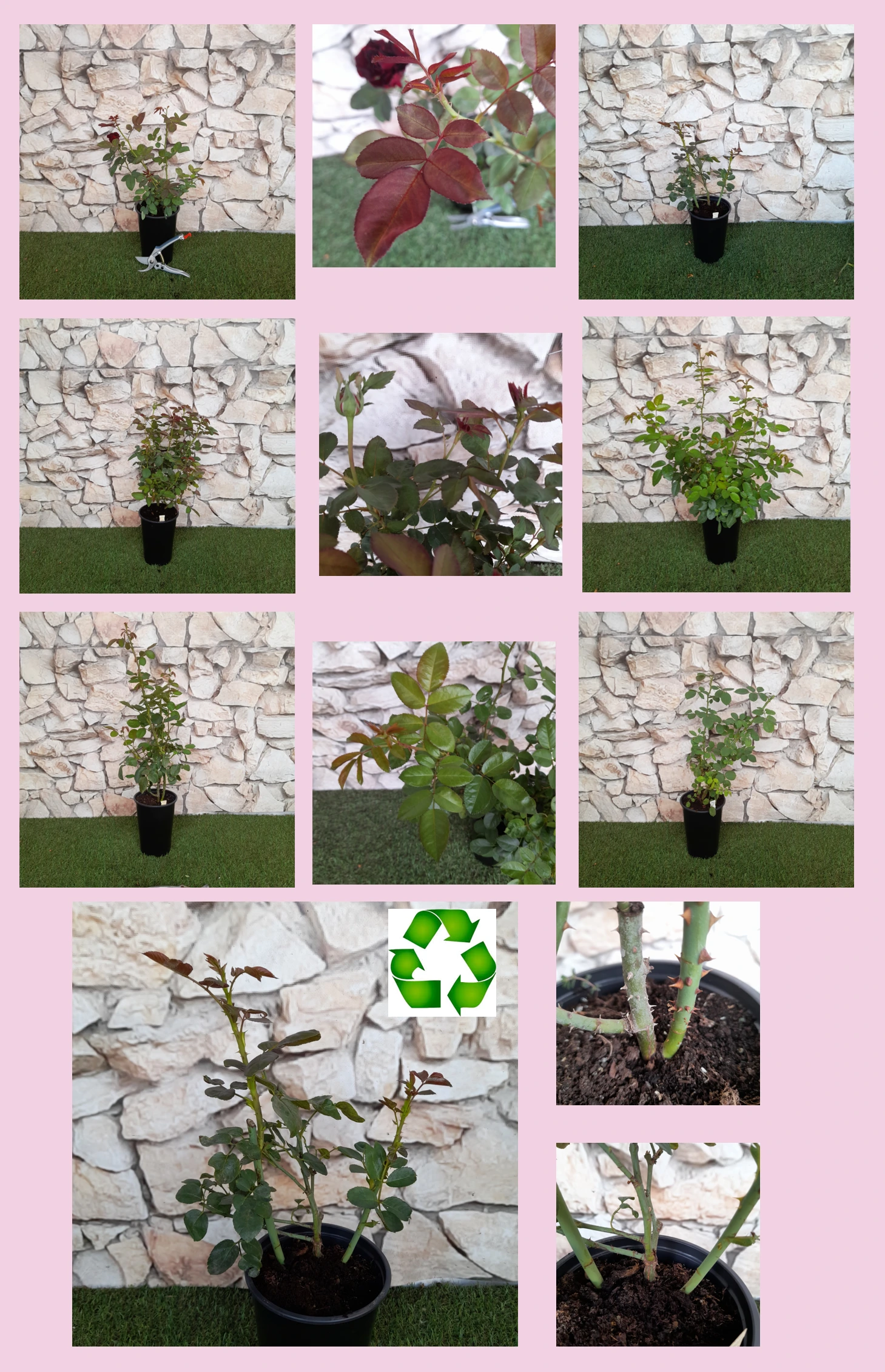
Crop overview: several varieties and growth stages in a short crop section.Shoot system: intensive growth of fresh basal shoots on a young plant.Root system: demonstration of a vigorous root system permeating the growing medium, by removing the pot.Balance: mature plant with root system and shoots in harmony with each other.
Information about the videos
The video series is not a “seasonal showcase”; it illustrates the essence of pharmaROSA® own-root cultivation in a tangible way: how the plant is built up, what the root system is like and how the shoot system regenerates. The recordings were therefore made at different times and with plants at various stages of development, so mixed foliage levels and differing stages of growth may appear in the videos. They are not a ‘sample’ of the batch dispatched, but a visual explanation of how the technology works. The current condition of the rose available to order — typical for the given period and similar to what you can expect to receive in the parcel — is shown in the upper part of the product page.
Pages for private customers Garden roses for the family garden, with minimal care → ORIGINAL® Premium garden roses – instant impact, a truly showpiece garden → EXTRA® Pages for professionals and private customers Roses for public spaces – large areas, sustainable maintenance → NATURAL® Roses for projects – hedge and row planting, fast implementation → RAPID® For professional partners only Production – propagation material for garden roses, wholesale → NEONATAL®
Company details
PharmaRosa Ltd. Company registration number: 01-09-717479 VAT number: 13075314-2-43 Plant health registration no.: HU130721 Bank account (IBAN): HU85117631891388688400000000 BIC (SWIFT): OTPVHUHB Bank name: OTP Bank Nyrt.